
 Gary Dean
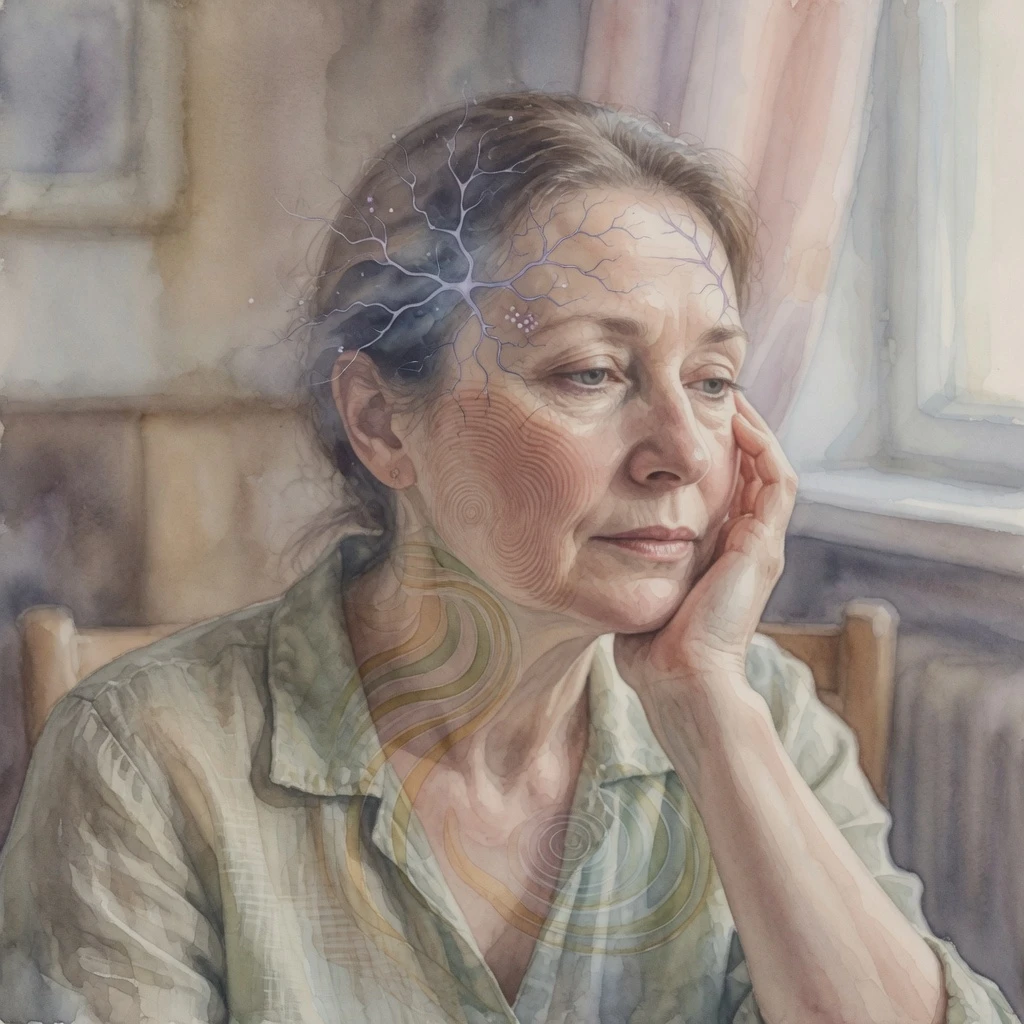
Why does a dharma feel, from the inside, not like a belief you hold but like reality itself? Because it was never installed as a belief. It was grooved into your gut, your habits, and the wiring of your brain, below the reach of the part of you that could doubt it.
A man who has not believed in God for thirty years stands at his mother’s funeral, and as the old words begin, the ones he was raised on and long ago decided were false, he finds, to his irritation and surprise, that his throat closes and his eyes sting. Or: a woman who can give a crisp, confident argument for why no food is unclean, why it is all just protein and habit and ancient plumbing rules, cannot, when it comes to it, bring the forbidden thing to her lips. Her hand will not do it. Or, simpler still: you feel the back of your neck prickle when a flag goes up and a crowd goes quiet, and some part of you stands a little straighter, whatever your politics, whatever you think you think.
In each case something is running a program the conscious mind has formally cancelled. The argument has been won, on paper, by the sceptic. And the body was not listening. There is a self underneath the self that was speaking, with its own convictions, and it does not answer to reason.
That underneath-self is where a dharma actually lives. In the first four parts we have looked at dharmas from the outside, as made things, plural things, things with histories and functions. But Part 4 ended on a puzzle: how a thing that human beings built gets so deep inside other human beings that it stops feeling built at all. To answer, we have to stop asking what a dharma teaches and start asking what it does to you – down through three layers: the gut, the body, and the brain itself.
The elephant and the rider
There is a flattering story we tell about ourselves, and it is mostly wrong. The story is that we are reasoning creatures who examine the evidence, weigh the arguments, and arrive at our moral convictions as conclusions. On this picture, we believe cruelty is wrong because we have thought it through.
The psychologist Jonathan Haidt has spent a career showing that this is almost backwards, and he has a useful image for the truth. The mind, he says, is like a small rider on the back of a very large elephant. The elephant is everything fast and automatic in us, our instincts and gut reactions; the rider is conscious reasoning. We imagine the rider is steering. In fact, most of the time, the elephant leans where it was always going to lean, and the rider’s real job is to come up with a respectable reason after the fact. In Haidt’s blunter phrase, moral judgement is ‘the emotional dog and its rational tail’. The feeling comes first, fast and certain, and the justification trots along behind to explain a verdict that was already reached.
If that is right, then the interesting question about any dharma is what it does to the elephant. Haidt has a second idea that matters as much. The elephant, he proposes, comes equipped with several moral senses, a small set of evolved ‘foundations’ he likes to call the taste buds of the moral mind. There is a taste bud for care, which flares at cruelty and suffering. One for fairness, which flares at cheating. One for liberty, which flares at being dominated. And then a cluster he calls the binding foundations: loyalty, which prizes the group and hates the traitor; authority, which respects rank and order; and sanctity, which recoils from the degraded and the impure and guards the holy.
Working across cultures, the anthropologist Richard Shweder found the same spread under three broad headings: an ethics of autonomy (the language of harm, rights, and fairness to individuals), an ethics of community (the language of duty, loyalty, hierarchy, and one’s place in a whole), and an ethics of divinity (the language of purity, sanctity, and the sacred order). Most of the modern West speaks fluent autonomy and finds the other two faintly embarrassing or sinister. Most human cultures, across most of history, have spoken all three as a matter of course. When someone formed by an ethics of divinity and someone formed by an ethics of autonomy argue about what may be done with a body, or a flag, or a holy book, they are not drawing different conclusions from shared premises. They are speaking different moral languages, each fluent, each half-deaf to the other.
Every human being has all of these, more or less, but no two cultures cook with them the same way. So a dharma is, in large part, a particular recipe written over those shared taste buds: the first layer of how it gets inside you. It cranks some up and mutes others. One tradition builds its whole moral world on sanctity and loyalty and authority, so that purity and faithfulness and proper order feel like the very substance of goodness. Another builds almost everything on care and fairness, so that those same concerns for purity and hierarchy come to feel faintly disgusting. The people raised in those two dharmas are, mostly, tasting the same situation with differently tuned tongues, and then their riders are manufacturing the arguments. This is why moral disagreement across dharmas is so strangely hopeless, so prone to each side concluding the other is worse than wrong: depraved. One cannot argue someone into a taste they do not have.
Though I should be straight about how firm that map is. The taste-bud image is vivid and useful, but the specific list has never been stable, and Haidt has always said so, asking openly how many foundations there really are. Since then the picture has grown shakier rather than firmer. When Kirill Zakharin and Timothy Bates tested whether the six behave like six distinct things in how people actually answer, the model did not fit; the versions that did fit came out with a different set, and more often than not with seven. Sanctity is the weakest of the lot, used so many different ways across studies that Kurt Gray and his colleagues concluded it is not a single thing at all, but a bundle of themes held together only by not being obvious harm. Haidt’s own team has since revised the theory and split fairness in two.
There is also a rival account. Back in Part 1 we met Oliver Scott Curry’s argument that morality is a set of solutions to the recurring problems of cooperation. When Curry’s team put the two frameworks head to head, testing each against people’s real moral judgements, the cooperation model fitted and Haidt’s did not. I am not going to try to resolve that fight, but I notice what the disagreement is actually about: the inventory, not the thing the inventory is for. Both camps hold that there is a small set of moral concerns humans everywhere run on, that we do not learn them from scratch, and that different cultures crank them to wildly different settings. So take the taste buds as a working vocabulary rather than a parts list.
The sharpest name for that deadlock between dharmas is the philosopher Joshua Greene’s. There are, he says, two quite different moral tragedies. The first is the old one a dharma exists to solve: me against us, the selfish individual tempted to cheat the group, which every working ethic labours to overcome. The second is the one that undoes us now, and a dharma cannot solve it, because a dharma is it. Greene calls it the tragedy of commonsense morality: not me against us, but us against them, two groups each equipped with a moral system that is internally coherent, deeply felt, and flatly incompatible with the other’s. Each side experiences its own parochial intuition as plain, self-evident right, and the other’s as obvious wickedness. In truth, to put it with some cruelty, what each is calling ‘right’ is often just after-the-fact rationalisation slathered over a self-serving, group-bound gut feeling. Two dharmas meeting at a border do not feel to those involved like two recipes. They feel like good meeting evil, from both sides at once.
Whose gut?
Most people reading this, like me, have a moral palate that runs heavily on care, fairness, and liberty, and rather lightly on sanctity, loyalty, and deference to authority. That particular setting feels, from the inside, not like one recipe among many but like the absence of recipe, like plain, neutral, grown-up human decency, the place one ends up on giving up superstition and tribe and simply thinking clearly. That feeling is itself the thing to be suspicious of.
Joseph Henrich and his colleagues gave the relevant population a deliberately rude acronym: WEIRD, for Western, Educated, Industrialised, Rich, and Democratic. These are the people on whom the science of human psychology was overwhelmingly built, because they are the people who happened to be standing near the universities. And the discovery, made over years and across domain after domain, is that WEIRD people are not a representative sample of humanity at all. On how they treat strangers, on whether they see the world in wholes or in parts, on whether they define themselves as individuals or as threads in a family, even on which way they fall for certain optical illusions, the modern Western mind turns out to be a global outlier, one of the least typical varieties of human being on the planet. The morality that feels like the human default is a local product, and a statistically peculiar one.
The same parochialism hides inside even our theories of moral growth. The most famous account of how children develop morally, Lawrence Kohlberg’s, arranges moral reasoning into a ladder of stages, climbing from a childish ‘avoid punishment’, through ‘follow the rules of my group’, up to a supposed summit of abstract universal principle: the lone conscience that can defy an unjust law in the name of pure justice. It is an appealing picture, until one notices that the summit looks suspiciously like a Western philosophy professor, and that the people who reliably score highest on it are the educated Western individualists who designed the test.
The psychologist Carol Gilligan landed the hardest blow. Kohlberg had built his ladder almost entirely by studying boys, and when girls reasoned about moral problems in the language of care, relationship, and responsibility rather than abstract rules, the scoring marked them down, as though a morality centred on not abandoning people were a less grown-up thing than a morality centred on principle. It was not less grown-up. It was a different dharma’s priorities, mistaken for a lower rung on a universal ladder. Even our measuring stick for moral maturity had a particular dharma quietly carved into it.
The neuroscientist Robert Sapolsky gives the screw one more turn. The moral convictions we would stake our lives on, the ones that feel too plainly, eternally true to be cultural at all: that slavery is an abomination, that the deliberate torture of a child is unforgivable. These feel like bedrock, like things any decent human in any age would have felt in their bones. They are not. They are recent. For most of human history most people felt no such automatic horror, and the reason we feel it now, instantly, in the gut, without having to reason it out, is that generations before us did the hard, contested, deliberate moral reasoning and the dangerous activism that slowly retrained the human gut. Your intuitions, in Sapolsky’s phrase, are ‘the end products of learning’. Your guts learned their intuitions. The very thing that feels most like untaught nature is the most thoroughly taught thing of all.
So the first layer of installation is this: more than handing you beliefs to consider, a dharma tunes the instrument on which you will feel, before you ever reason, what is decent and what is disgusting, and it tunes it so early and so deep that the tuning feels like the sound of reality itself.
We become what we repeatedly do
If morality is mostly the elephant, and the elephant is trained, the obvious next question is: trained how? And the answer is the second layer. Not, in the main, by teaching, but by drilling.
The point is as old as Aristotle, who saw it clearly more than two thousand years ago. We do not become good by learning the definition of goodness, he argued, any more than we become builders by reading about building. We become just by doing just acts, brave by doing brave acts, temperate by doing temperate ones. Virtue, for Aristotle, is not a belief one holds in the head but a disposition, a settled habit of the whole person, grooved into you by repetition until it runs without effort, the way a trained musician plays without thinking about the notes. (The famous line often quoted here, ‘we are what we repeatedly do; excellence, then, is not an act but a habit’, is in fact a paraphrase by the historian Will Durant, not Aristotle’s own words.)
This is why real dharmas are so heavy with practice, far heavier than mere belief could ever require. The five daily prayers, the fast that empties the stomach for a month, the bow, the prostration, the chant repeated until the words dissolve, the dietary discipline observed at every single meal: the sheer relentless repetition is a central mechanism. Doing the thing ten thousand times grooves the disposition, and the grooved disposition, not the stated belief, is what runs a life when the mind is elsewhere.
And ritual does something even bare repetition cannot. It bonds. More than a century ago, the sociologist Émile Durkheim noticed that when people move and chant and feel together in a rite, something is generated that he called ‘collective effervescence’, a kind of emotional electricity that fuses a crowd into a community and leaves the participants feeling they have touched something larger and sacred. That sounds mystical, but it has been measured in the body, in one striking field study, when anthropologist Dimitris Xygalatas wired up a Spanish village firewalk: both the men who walked across the coals, and the spectators who only watched. The walkers’ hearts raced, as one would expect. The startling finding was that the spectators’ hearts raced in synchrony with them, beat-for-beat, and the synchrony was tightest between people who loved each other, so tight that one could read the social distance between two people from the similarity of their heartbeats. The rite was, quite literally, tuning their bodies to a common rhythm.
Even the bare form of ritual does work on the mind. Veronika Rybanska and her colleagues ran a three-month programme of circle-time games with two hundred and ten schoolchildren, in places as different as Slovakia and the islands of Vanuatu. The training improved the children’s self-control, and through it their ability to delay gratification; and the improvement was larger when the very same games were framed in what the researchers call a ‘ritual stance’ rather than a practical one. The stance is nothing more than performing a precise sequence of actions carefully, just because that is how it is done, with no practical purpose at all. The bare form did not do the work by itself, then; it sharpened what the drilling achieved: the discipline of doing it exactly is itself a training of the will. The body, in all of this, leads and the mind follows. You do not kneel because you already feel reverence; very often you kneel first, night after night, and the reverence is what grows in the worn groove of the kneeling.
Not all dharmas drill the same way. Anthropologist Harvey Whitehouse has mapped two very different routes to the same destination. One he calls the doctrinal mode: frequent, calm, low-key repetition, the daily prayer and the weekly service and the lesson learned by rote, which lays the dharma down in ordinary memory and can hold a vast, scattered community in loose agreement for centuries. The other he calls the imagistic mode: rare, shattering ordeal, the terrifying initiation or the once-in-a-lifetime rite, which burns itself into memory as a single unforgettable event and welds a small group into something close to a single self, fused for life. The quiet daily groove and the rare branding ordeal are two technologies for one task, installing a disposition so deep it feels like identity, and most dharmas run on some blend of the two.
In the last part of his great book Durkheim turns from the festival to what he calls the piacular rites, the rites of mourning, and his evidence is the Warramunga of central Australia, where the women gashed their scalps and the men their thighs, and where the people who must wound themselves were fixed by kinship in advance. Mourning, he concluded, ‘is not a natural movement of private feelings wounded by a cruel loss; it is a duty imposed by the group. One weeps, not simply because he is sad, but because he is forced to weep’. The group, subtracted by one, gathers and grieves on schedule so as to feel itself whole again, and the feeling manufactured in the rite is then read by each mourner as the depth of their own loss. This is the installation machinery at its most intense, an imagistic event in Whitehouse’s terms. The man at his mother’s funeral, at the start of this part, is a Warramunga mourner with the etiquette out of sight: the old words were a cue for a bodily routine drilled into him at every funeral of his childhood, and the body, which had never been consulted about his change of mind, did what it had been trained to do.
If a dharma installs itself through ritual, repetition, ordeal, and the disciplined body, what happens to a dharma that rejects supernatural ritual? That is the secular project’s hardest practical problem, and people have begun, self-consciously, to experiment with it. There are now godless congregations, gatherings with names like the Sunday Assembly, half-jokingly described as Pentecostalism for atheists. They borrow the song, the assembly, and the shared rhythm, and drop the doctrine to rebuild the installation machinery without the gods. Whether such things can really cultivate durable dispositions, or whether the apparatus only bites when anchored to something held sacred, is genuinely unknown.
All the way into the brain
The installation goes deeper than habit, down into the tissue, and here we reach the third layer, the one everyone is most excited about, and the one most oversold.
The exciting findings are real, though smaller than they sound. When Antoine Lutz and Richard Davidson studied Tibetan monks with tens of thousands of hours of meditation behind them, they recorded patterns of high-frequency, perfectly synchronised brain activity ‘greater than any previously reported’ in healthy people. Take that result with care: there were eight monks, nobody has repeated the study, and the frequency band it depends on is the one most easily contaminated by the electrical activity of the scalp muscles you use to frown or clench your jaw. And the lab work turned up something useful for thinking about ethics: compassion, it seems, is not the same thing in the brain as empathy.
When the seasoned monk Matthieu Ricard was asked simply to feel the suffering of others, his brain lit up the ordinary circuitry of shared pain, and he found it quickly unbearable, the way a nurse or a parent can be hollowed out by absorbing too much hurt. But when he switched to trained compassion, a warm, steady wish for others to be well, the distress circuitry went quiet and the brain’s warm reward system came on instead. This is a striking vindication of something the contemplative traditions long insisted on and that the psychologist Paul Bloom has argued hard in our own day: raw empathy, the soaking up of others’ pain, is actually a poor moral guide. It is exhausting, and it is parochial and innumerate, lavishing itself on the single near sufferer one can see while going numb to the distant millions one cannot. The dharmic move, to cultivate a calm and even-handed goodwill rather than to drown in fellow-feeling, is the one the brain rewards.
One might expect that the people most overwhelmed by the sight of suffering would be the ones who help most. The opposite is closer to the truth. Sapolsky points to evidence that people exposed to another’s distress tend to step in and help when their own heart rate goes down, when they steady themselves, rather than when it spikes in shared panic. Raw, contagious distress tends to make us flinch away or freeze, curled around our own discomfort; it is the settled, regulated compassion that frees a person to act. The traditions that teach us to breathe, to steady ourselves, and only then to help were being effective, not cold, and the physiology backs them up.
The popular headline, that meditation simply ‘rewires your brain’, outruns the evidence, and the real story is more interesting than the hype. The most eye-catching claims were about structure, that practice visibly thickens the cortex or grows grey matter. Early studies suggested as much. But when Richard Davidson’s own laboratory, one of the founding temples of the whole field, ran the rigorous trials that the early work lacked, randomising participants and controlling properly, the structural changes did not appear. A founding lab failed to replicate the founding claim, which is the kind of self-correction that separates science from sales. The careful verdict is that sustained practice reliably changes how the brain functions, especially in attention and stress regulation, while the dramatic claims that it reshapes the brain’s anatomy are, for now, unproven. And we should remember that almost any serious training changes the brain; the brains of jugglers and taxi drivers change too. That the brain adapts to what we repeatedly do is Aristotle’s point again, not a miracle.
There is a silence in this literature, and it is the one that matters most for anyone who takes up a practice on a book’s recommendation. Meditation can hurt people. When Marco Schlosser and his colleagues surveyed more than twelve hundred regular meditators, a quarter of them reported particularly unpleasant experiences they attributed to the practice itself: anxiety, dread, the floor of the self giving way, dissociation from the world or from their own bodies. Willoughby Britton, who studies these effects, argues they are neither rare nor a sign of doing it wrong; they are what a powerful technique does to some people some of the time, and the traditions that developed these methods knew it, which is why they surrounded them with teachers and staged them over years. Stephanie Coronado-Montoya and her colleagues found that of a hundred and twenty-four published trials of mindfulness, a hundred and eight reported positive results, a ratio no honest field produces.
So the picture is not that meditation is fraudulent. It is that a real and useful technology has been marketed with the risks filed off, and a book arguing that dharmas install themselves below the level of argument ought to say plainly that the installation can go wrong.
A darker finding used to close a circle we keep drawing, and I have had to give it up. The chemistry of human bonding is sold to us as a ‘love hormone’, oxytocin, the warm molecule of trust and connection. The sophisticated correction, the one I reached for in earlier drafts of this part, was that oxytocin is really a parochial drug: Carsten De Dreu’s experiments appeared to show it driving what researchers call ‘tend-and-defend’, the same surge that deepens devotion to your own people sharpening suspicion of the stranger. The fence, written into the bloodstream. It makes a wonderful sentence. The evidence, as it stands at the moment, no longer carries it.
The first problem is plumbing. Nearly all of this work squirts oxytocin up volunteers’ noses, and the physiologists Gareth Leng and Mike Ludwig have argued that almost none of it reaches the brain; what it reliably does is flood the blood with far more of the hormone than a body would ever produce on its own. The second problem is size. These are small studies, underpowered in the statistician’s sense, which is a dependable recipe for results that shine once and dim on re-examination. And then there is what De Dreu himself published in 2024. Across fifty-one nations, in Kenyan communities and in a representative British sample, people competed harder with members of their own group than with outsiders, whenever resources inside the group felt scarce. Biologists studying birds and primates call this the nasty-neighbour effect. It is very nearly the opposite of the tidy story.
So the fence is real, but the bloodstream did not put it there. We met it in the village and again in the covenant, and it is built by the ordinary machinery this part has been describing all along: habit, belonging, repetition, the slow grooving of us and them. That is a less thrilling answer than a molecule, and a sturdier one. The nasty neighbour carries a warning we will need later: the fence can run inside a group as readily as around it.
And because the brain images are so seductive, it needs to be said plainly: none of this makes any dharma true. A coloured scan showing the neural signature of compassion no more proves that compassion is right than a scan of revulsion proves that a taboo is justified. The brain can show us that a conviction is installed, deeply, physically, beautifully installed. It can never show us that the conviction is correct. The wiring is a fact about the believer, not about the world.
Why it feels like truth
The three layers, together, answer the question we started with.
Your dharma lives in your moral taste buds, in the instantaneous flare of approval or disgust that arrives long before any argument and that your reasoning mind merely dresses up afterwards. It lives in your trained habits, in dispositions grooved so deep by repetition that they run on their own, without consulting you, when you are tired or frightened or not paying attention. And it lives in the very tuning of your brain, in circuits worn smooth by years of practice. One thing is missing from that list: your conscious, deliberating, belief-weighing mind, the part of you that could examine a claim and find it wanting, does very little of the installing.
That is not to say it does nothing. Reason can choose what to submit itself to, can argue an inherited tradition into a new shape, and can give or withhold its consent to a practice whose work will be done later and lower down. The wong sikep of Part 3 did exactly that, deliberately and out loud, and the convert and the reformer do it still. What reason rarely manages is the installing itself. It can walk a person to the training ground; it cannot do the training.
That absence from the deep work is the whole secret, and it is why a dharma feels the way it does. It does not feel like a belief one holds because it was never installed as a belief in the first place. It was installed underneath belief, in the layers that were running long before the reasoning mind woke up and that go on running whether the reasoning mind agrees or not. Most of what you carry you did not reason your way into, which is precisely why it cannot be reasoned back out, and why the man at the funeral weeps over words he is certain are false. From the inside, a working dharma cannot feel like an opinion about reality. It feels like reality, because it is operating below the level of the self that would be capable of doubting it.
The missing elephant
The argument so far has assumed one thing without actually saying it: that the elephant is there to be trained. That underneath the rider sits a great warm animal of instinct, the gut that flares at cruelty, the fear that grips, the empathy that soaks up another’s pain, waiting to be grooved and tuned. But in a small fraction of people (how small depends on the instrument doing the counting) that animal runs faint from very early on. This is the stretch of the human range we reach for the word psychopath to name, and the word is a good deal tidier than the thing: it is no formal diagnosis, and the research treats it as a dimension, a direction people lie further or less far along, never a separate kind of human being. What is thin at that end of the range is not a wicked belief that got installed. It is the very substrate every dharma installs into.
When the instrument is thin, the machinery has almost nothing to work with. The moral taste buds barely flare, so the flash of care or disgust that is supposed to arrive before reasoning does not reliably come. The grooving of habit has far less to grip, because guilt and fear, the mortar that sets a conscience, are running low. The compassion the monk spent ten thousand hours warming is, in this brain, cool to begin with; this is the person on whom the ordinary apparatus of shame and fellow-feeling can find almost no purchase. The installation engine, so nearly irresistible in the rest of us, meets a surface it cannot easily bite. The limit case proves the rule from the far side: morality is grooved into an affective instrument, and where the instrument is faint, the grooving barely takes.
The core of that difference is a single dialled-down setting: fear. The finding about helping returns here: the people who run toward the fire are the ones whose hearts steady; the useful thing is a fearless calm. The person whose fear runs low to begin with has that calm for nothing. So the very same low-fear temperament is the raw material of the fearless rescuer, the steady surgeon, the leader who does not flinch in the crisis, and of the cold exploiter who feels nothing as he uses others. Which one a life becomes is not fixed by the temperament; it is settled by what, if anything, gets built around it. Even this is contested: the fearlessness that does the good may be the least psychopathic part of the pattern, separable from the callousness that does the harm, so that ‘the useful psychopath’ may be less a paradox than two different things wearing one name.
Still, the deeper point survives the caveat. A dialled-down fear response is, in itself, neither good nor evil; it waits for a dharma (or the absence of one) to make something of it. The instrument is as morally blank as the machinery that would train it. Which is only a small biological rehearsal for the larger, harder thing we have been circling all along.
The machine has no conscience
Not one item on the list of what makes a dharma powerful has any moral content of its own. The grooving of habit will install cruelty exactly as faithfully as it installs kindness; the same patient repetition that shapes a saint shapes the guard who has learned to process the condemned without flinching. The collective effervescence that fuses a congregation in love will fuse a mob in hatred with the identical electricity. The belonging that makes us cherish our own is the same belonging that teaches us whom to hold at arm’s length. The installation machinery is, from top to bottom, morally blank. It will drive whatever is fed into it down into the gut, the muscle, and the brain with the same quiet efficiency, and label the result, in every case, ‘obvious truth’.
And because it works below awareness, you cannot feel, from the inside, the difference between a dharma that is guiding you and one that has captured you. Both feel exactly the same. Both feel like simply seeing the world as it is. The depth that lets a great dharma make a person good is the identical depth that lets a corrupt one make a person monstrous while leaving them serenely certain of their own decency.
We have spent four parts, in admiration, watching how dharmas hold us together, and this one watching how they get inside us. If this machinery runs beneath reason, installs whatever it is given, and feels like truth no matter what it has installed, then the most pressing question is not how a dharma works, but how it goes wrong.
« 4: A world of dharmas | 6: When dharmas go wrong »
Sources & further reading
This part is built from the project’s research notes, which carry the full inline citations. Listed here: the notes it draws on, and the key works behind them.
Research notes
Research notes used in this book are published on GitHub.
- 5.3 Moral Psychology & Development – Haidt’s intuition-first model and moral foundations, the WEIRD critique, and ‘the guts learn their intuitions’. The spine of the first two layers.
- 5.4 Ritual, Practice & Habituation – Aristotelian habituation, ritual synchrony and collective effervescence, the ‘ritual stance’, and the morally neutral installation machinery.
- 5.1 Neurological Basis – gamma synchrony, compassion versus empathy, the structural-change non-replication, and the retreat from oxytocin’s ‘tend-and-defend’.
- 5.2 Evolutionary Psychology – the costly-signalling and parochial-altruism background to ritual and the in-group fence.
- 5.5 Psychopaths & the Exploiter Limit-Case – the ~1% in whom the affective substrate is constitutionally muted; the low-fear temperament as morally blank raw material (fearless rescuer or cold exploiter), and why its ‘useful’ edge is contested.
Key works
- Jonathan Haidt, The Righteous Mind (2012), and ‘The Emotional Dog and Its Rational Tail’ (2001) – the elephant and rider, and Moral Foundations Theory.
- On how unsettled the foundations are: Kirill Zakharin & Timothy Bates (2021) on the Moral Foundations Questionnaire’s structure across five studies and 11,496 people; Kurt Gray, Nicholas DiMaggio, Chelsea Schein & Frank Kachanoff (2022), ‘The Problem of Purity in Moral Psychology’; Mohammad Atari, Jonathan Haidt, Jesse Graham and colleagues (2023) on the revised six-foundation MFQ-2; and Oliver Scott Curry, Matthew Jones Chesters & Caspar Van Lissa (2019), ‘Mapping morality with a compass’, the head-to-head test in which morality-as-cooperation outperforms Moral Foundations Theory.
- Joseph Henrich, Steven Heine & Ara Norenzayan, ‘The Weirdest People in the World?’ (2010) – WEIRD samples as global outliers; with Robert Sapolsky, Behave (2017), on intuitions as learned.
- Aristotle, Nicomachean Ethics II.1, on virtue as habituation (and Will Durant’s The Story of Philosophy for the commonly misattributed ‘we are what we repeatedly do’).
- Émile Durkheim, The Elementary Forms of Religious Life (1912), on collective effervescence, and Book III on the piacular rites of mourning among the Warramunga; with Dimitris Xygalatas on firewalk heart-rate synchrony, and Harvey Whitehouse on the doctrinal and imagistic modes of religiosity, with the Kavanagh group’s caution that felt intensity, not the pain itself, may be what does the fusing. Durkheim himself extended the mechanism beyond religion, to nationalism and devotion to the flag, and the extension still earns its keep: ReligionForBreakfast’s video essay ‘Fandoms are Religions’ (2025) reads stadium sport and Taylor Swift’s 2023 Eras Tour as collective effervescence in working order – the same machinery, run without gods. On the ‘ritual stance’: Veronika Rybanska, Ryan McKay, Jonathan Jong & Harvey Whitehouse (2018), ‘Rituals Improve Children’s Ability to Delay Gratification’, Child Development 89(2):349–359 – a three-month intervention with 210 children in Slovakia and Vanuatu, whose effects were amplified when the task carried ritual rather than instrumental cues.
- Antoine Lutz, Matthieu Ricard & Richard Davidson on meditation, gamma synchrony, and the compassion/empathy distinction (the 2004 gamma study has eight subjects); Paul Bloom, Against Empathy (2016); and Kral, Davidson et al. (2022) on the absence of structural brain change.
- On the harms: Marco Schlosser and colleagues (2019), who found a quarter of 1,232 regular meditators reporting particularly unpleasant meditation-related experiences; Willoughby Britton, ‘Can mindfulness be too much of a good thing?’ (2019) and her work on defining meditation-related adverse effects; and Stephanie Coronado-Montoya and colleagues (2016), who found 108 of 124 published mindfulness trials reporting positive results.
- On oxytocin, the correction rather than the claim: Hasse Walum, Irwin Waldman & Larry Young (2016) on how underpowered the intranasal literature is, and Gareth Leng & Mike Ludwig (2016), ‘Intranasal Oxytocin: Myths and Delusions’, on how little of it reaches the brain; with Angelo Romano, Jörg Gross & Carsten De Dreu, ‘The nasty neighbor effect in humans’ (Science Advances, 2024), in which people compete more with their own group than with outsiders under perceived scarcity. Carsten De Dreu et al. (2010, 2011) on oxytocin and parochial ‘tend-and-defend’ altruism is the earlier work these qualify.
- Joshua Greene, Moral Tribes (2013) – the tragedy of commonsense morality, the Us-versus-Them clash a dharma cannot solve.
- Lawrence Kohlberg’s stages of moral development, with Carol Gilligan, In a Different Voice (1982) – the care-versus-justice critique; and Richard Shweder on the ethics of autonomy, community, and divinity.
- On the missing substrate: Hervey Cleckley, The Mask of Sanity (1941), and Robert Hare, Without Conscience (1993), on psychopathy as constitutionally muted conscience; with the ‘fearless dominance’ / boldness research (Lilienfeld; Patrick) and its critics (Lynam & Miller) on whether the useful edge is even part of psychopathy.