
 Gary Dean
In July 2001, I wrote an essay on doing business in Indonesia. It was commissioned by the East Asia Analytical Unit of the Australian Department of Foreign Affairs and Trade, as part of a book entitled Indonesia: Facing the Challenge. At the time, Indonesia was emerging from the wreckage of the Asian financial crisis, navigating the uncertainties of the early Reformasi period, and struggling to build a functioning democracy from the ruins of 32 years of authoritarian rule. The ‘World Competitiveness Scoreboard’ ranked Indonesia at 45, barely ahead of Russia.
A quarter of a century later, Indonesia is the largest economy in Southeast Asia, a G20 member, and, despite persistent challenges, a country that has confounded many of the pessimists of 2001. Its democratic institutions, while imperfect and not without serious setbacks, have proved more durable than many predicted. Its digital economy is the largest in the region. And through all of this, its cultures, diverse and ancient, have proved even more durable than its institutions.
This essay is an updated version of that original. Much has changed in the intervening years. The regulatory and business landscape has been transformed, sometimes beyond recognition. The Omnibus Law, the OSS licensing system, the BUPM investment list, the BPJS social security scheme – none of these existed then. But what has not changed, and what I believe will not change in any foreseeable timeframe, are the deep cultural structures that shape how Indonesians think, communicate, build relationships, and do business.
Much emphasis in what follows is given to the issue of culture – more specifically, the perceptions, outlooks and beliefs that affect human interaction. In the past, perhaps, Western businesspeople’s understanding of ‘culture’ has been relegated to the realm of manners or etiquette, of simplistic ‘do’s and don’ts’. However, cultural misunderstanding or miscommunication is far more likely to occur at the level of perception and outlook, rather than etiquette. This is not to suggest that etiquette is unimportant, but rather to shift emphasis from those external or visible cultural expressions to those that are not immediately obvious, particularly as they affect communication.
The Western businessperson in Indonesia must try to remain conscious of the possibility of ‘difference’ when interacting with Indonesians. Of all the nations of East Asia, Indonesia arguably remains the most strongly traditional in terms of its cultural characteristics and outlooks. In the bustle of Jakarta’s traffic, tall buildings and gleaming shopping centres, it is all too easy to think of Indonesia as a modern nation with outlooks and aspirations that more or less match those of the West. However, beneath these modernist veneers, the sounds of different drummers continue to beat. Even apparently ‘Westernised’ Indonesians, including those with a solid Western tertiary education, cannot entirely break free from those patterns, values, attitudes and outlooks formed from the substratum of their indigenous cultures.
Westerners often forget that they too are products of culture. Many Westerners may subconsciously consider their values to be universal in nature. But whatever our convictions, when communicating with those who may not share a similar worldview, the possibility must be left open that what we believe to be self-evident may not be shared by everyone. After thirty years in Indonesia, this remains, for me, the single most important piece of advice I can offer.
Java: Social and Cultural Landscape
Politically, culturally, and geographically, Java sits at the centre of the Indonesian nation. Without Java, there could not be an Indonesia. The Javanese ethnic group occupies the majority of the island of Java; other major ethno-linguistic groups include Sundanese (West Java), Betawi (from the area around Jakarta) and Madurese. Although Java represents only 7% of Indonesia’s total landmass, ethnic Javanese comprise about 40% of Indonesia’s population of more than 280 million. Java itself is home to some 157 million people (over half the national population crammed onto 7% of the land), making it one of the most densely populated places on earth. Javanese attitudes and worldviews permeate the Indonesian bureaucracy, government and military to this day, hence the great importance of understanding the Javanese perspective when doing business in Indonesia.
The great majority of Javanese could be said to be sympathetic to mystical dimensions of human existence. The typical Javanese worldview is based on the essential unity of all existence, in which life itself is experienced as a kind of harmony with a universal order. This worldview emphasises inner tranquillity, stability, acceptance, the subordination of the individual to society, and the subordination of society to the universe. Inter-personal relations are carefully regulated by customs and etiquette to preserve this ordered state. The anthropologist Paul Stange described this as ‘the logic of rasa’: a mode of perception in which feeling, meaning and intuition are inseparable, and in which social harmony (rukun) is not merely desirable but cosmologically necessary.

These, of course, are the high ideals of Javanese culture that may not always be realised in actual life. In every culture, there is a distance between ideal behaviour and reality. Nevertheless, the concept of harmony in the Javanese community is a core concept, notwithstanding outbursts of uncontrolled emotion that may occasionally be displayed.
Javanese society and culture is by no means singular or homogenous; it is a complex amalgam of differing tendencies and apparently opposing worldviews. This must be kept in mind when attempting to generalise about ‘Javanese culture’; it is not unitary, but rather comprises a composite of influences, both modern and traditional, religious and secular/nationalist.
Javanese society has long been analysed in terms of three major social polarities or worldviews: the abangan (the ‘commoners’), the priyayi (the ‘nobility’), and the santri (the Islamists, more appropriately referred to as muslimin). These somewhat arbitrary categories – first systematised by the anthropologist Clifford Geertz in his landmark 1960 study, based on fieldwork in the small East Java town of Pare (which he called ‘Mojokuto’) in the early 1950s – should not be interpreted as ‘classes’, but rather as ‘outlooks’; ways of looking at and making sense of the world. It is very common in Java to find people of all these outlooks living together under the same roof, and of course, there are very many shades of grey.
Although the abangan-priyayi-santri schema has been much criticised by academics, mainly because of its tendency to stereotype groups and individuals, its general relevance remains useful as a framework for understanding the major currents in Javanese society, provided one does not take it too literally.
More than 97% of Javanese nominally acknowledge Islam as their religion. However, caution is required when considering this fact, as Islam in Java is expressed in a diversity of ways, and depth of commitment to the religion is highly variable. Javanese who refer to themselves as muslimin (muslimah if female) more closely identify with Islam and its aesthetics. Muslimin comprise a significant minority of the Javanese population, and are themselves divided into traditionalist and modernist tendencies. Traditionalist muslimin, represented mainly by the mass organisation Nahdlatul Ulama (NU), adhere to a syncretic and mystically-inclined version of Islam that tends to be more open and flexible. Modernist muslimin, represented by Muhammadiyah, more closely adhere to a purist Arabian interpretation of Islam. Both, however, strongly identify themselves as Muslim, and both have become major forces in Indonesian civil society and politics over the past twenty-five years.
Other Javanese are rather ambivalent about their official religion. Although they will certainly refer to themselves as Muslim, they will rarely perform religious duties associated with Islam and do not structure their lives in accordance with its precepts. This worldview, referred to as abangan, sees itself as the bearer of indigenous Javanese culture. Their outlook is often coloured by the indigenous mystical animism of Java that predates the arrival of Islam by many centuries.
The priyayi, who in the past comprised the class of officials, military officers, and intellectuals, remain strongly associated with the bureaucracy and ruling elite. Like the abangan, the priyayi are nominally Muslim; however, their worldview is highly influenced by the culture of the royal courts of Java, such as Yogyakarta and Surakarta, which bear the deep imprint of the Hindu-Buddhist era. What might be called ‘neo-kratonism’ (the persistence and adaptation of traditional Javanese court culture and power concepts within modern institutions) continues to shape how power is understood and exercised in Indonesian corporate and government settings. In the traditional Javanese conception, power is not something delegated or shared but something accumulated and concentrated; the ideal leader is a still centre around whom everything revolves, whose authority radiates outward through layers of deference. This pattern is visible today in how Indonesian organisations are structured, how meetings are conducted, and how decisions are made – or, more precisely, how decisions are seen to emerge from a centre of authority rather than from open debate.
Javanese society is strongly patrician and hierarchical, with what appear to be great power distances between each level within a social structure. Showing proper respect, in speech and behaviour, is an important aspect of Javanese culture. Javanese society is highly inclusive; there is a place for everyone from the most high to the lowliest. Hierarchy ensures that every person in society knows both their place and their obligations within the social structure. Those in high positions should be shown respect; those in lower positions should be treated with goodwill and their welfare guarded.
This hierarchy is not merely social convention; it is built into the very structure of the Javanese language. Javanese has distinct speech levels: ngoko (informal, used among equals or to inferiors), krama (formal, used to superiors or elders), and krama inggil (highly refined, reserved for addressing people of the highest status), each with its own vocabulary. Using the wrong level is a source of genuine social discomfort, and getting it right requires constant, almost unconscious calibration of the relative status of speaker and listener. Younger Javanese, increasingly daunted by the complexity of krama, often default to ngoko among peers or switch to Bahasa Indonesia altogether, which has no such built-in hierarchy – one of the reasons it was chosen as the national language.
For the Westerner especially, adjusting to these notions of hierarchy can sometimes be difficult. The average Westerner in Java may often attempt to ‘flatten’ the appearance of power distance by treating every person as more-or-less equal. Unfortunately, such attempts to introduce Western-style egalitarianism into Javanese business or social contexts rarely produce the expected result, but more often produce confusion and discomfort. A Western manager in a workplace situation should avoid ‘pitching in’ with lower-ranking workers, unless this is absolutely necessary for demonstration purposes. Becoming ‘one of the boys’ is simply not understood, either by workers or by other Indonesian managers, who keep their place and maintain a proper distance. Respect and credibility may well be lost.
Javanese culture is characterised by collectivist values and by systems of patronage. Collectivism and patronage together stress vertical axes of human relationships, in contrast to the individualism and egalitarianism characteristic of the West, which stress horizontal axes. Patronage networks form the basis of many Javanese social, political and economic relationships. A person in an Indonesian company, government department, or the military may owe their position to a certain person, to whom they will remain indebted and to whom they must always defer. The 25 years since the fall of Suharto have not diminished the importance of patronage; research by political scientists such as Vedi Hadiz has demonstrated how patronage networks have merely adapted to democratic institutions and decentralised governance, creating what he terms ‘reorganised power’ in the regions.
Age remains an important determinant of social status in Java. The younger person defers to the older, in language and in attitude. A person, especially a man, is not considered to have reached maturity until roughly the age of 40. Other determinants of social status include marital status, gender and education. Thus, a 40-year-old married male with a university education would assume a high social status in nearly all situations. It still often happens that Western companies send their best and brightest person, who happens to be young, to negotiate with an Indonesian company, who may feel a little insulted that somebody more ‘authoritative’ was not sent to deal with them. Nothing is ever said directly to this effect; besides being impolite, Javanese would take these matters to be self-evident.
Gender dynamics have shifted more than other status markers over the past twenty-five years. Women-owned micro, small and medium enterprises now comprise nearly two-thirds of all MSMEs in Indonesia, and women play increasingly prominent roles in business, the professions, and government. However, traditional gender hierarchies persist in many settings, particularly outside major cities, and a female executive may still encounter assumptions about her authority that a male counterpart would not.
Patience, for Javanese, is a high virtue, and a lot of this virtue is certainly required in Indonesia, especially when engaging with corporate or government bureaucracies. The concept of jam karet (‘rubber time’) captures the elastic Indonesian relationship with schedules and deadlines. A sense of urgency is generally absent in the average workplace. Being late or not turning up at all at an appointed time, whilst less common than it once was, remains unremarkable.
The Western tendency to want to ‘cut through all the bullshit and get to the point’ usually ends up doing more harm than good within the Indonesian context. Relationships must be cultivated in order for trust to be established, and this cannot be rushed. It is important that the relationship is not ‘forced’, as frequently happens with Western businesspeople on tight schedules and planes to catch. Westerners often overestimate the depth of their relationships with Indonesian business associates, and perhaps become overly familiar too quickly because they misread the naturally friendly and polite manner of the average Javanese.
Communicative indirection and formality are other issues that can cause discomfort or difficulty for Westerners in Indonesia. What is not said is often more important than what is said.
The Urban Middle Class and Generational Shifts
Twenty-five years ago, these cultural patterns were more or less uniform across Indonesian society. Today, they remain the deep grammar of social interaction, but the surface is more varied. Indonesia’s urban middle class (estimated at around 48 million people and, notably, having contracted from a peak of 57 million before the pandemic) and its digitally-connected younger generation have developed hybrid cultural identities that blend traditional Javanese (or Sundanese, or Balinese) values with globalised, cosmopolitan outlooks. Young Indonesian professionals in Jakarta, Surabaya or Bandung may speak English fluently, have studied abroad, and be thoroughly comfortable with Western business culture. However, as Geertz observed decades ago, even the most ‘secularised’ young Indonesians cannot easily be classified outside the broad cultural currents of their society.
The Westerner doing business in Indonesia today will encounter a much wider range of Indonesian interlocutors than was the case in 2001: from the startup founder in a Bali co-working space who speaks fluent Silicon Valley, to the government official in a provincial capital whose outlook would have been entirely familiar to an observer a generation ago. The cultural principles described above remain the baseline; what has changed is the extent to which individual Indonesians may have layered additional, globalised outlooks upon that baseline. The prudent businessperson should never assume the baseline is absent merely because it is not immediately visible.
Overview of Recent Developments
In 2001, the road ahead was uncertain.
Twenty-five years later, Indonesia is the world’s fourth most populous nation, with more than 280 million people. Its GDP per capita has increased more than fivefold, from under USD 1,000 to approximately USD 5,000. Its competitiveness ranking improved from 45th to 27th by 2024, though it slipped back to 40th in 2025 amid trade tensions and political transition. While Indonesia still faces serious challenges, the trajectory has been unmistakably upward.

The transition was neither smooth nor painless. The presidency of Abdurrahman Wahid (Gus Dur, 1999-2001) brought genuine pluralism but also political instability. Megawati Sukarnoputri (2001-2004) provided a measure of stability but limited reform. The decade of Susilo Bambang Yudhoyono (2004-2014) saw the consolidation of democratic institutions, steady economic growth, and the establishment of the Corruption Eradication Commission (KPK) in 2003, arguably the most important governance reform of the post-Suharto era.
The KPK has prosecuted hundreds of corruption cases, including those involving governors, ministers, and legislators, sending a powerful signal that impunity is no longer guaranteed. However, a controversial weakening of the KPK’s powers in 2019 (through legislative changes to its mandate and the conversion of its investigators to civil servant status) has raised concerns about backsliding. Transparency International’s Corruption Perceptions Index tells a sobering story: Indonesia’s score has improved from roughly 19/100 in 2001 to 37/100 in 2024 – real progress, but still well below regional peers such as Malaysia (50), and a long way from ‘clean’.
The Joko Widodo (Jokowi) era (2014-2024) was defined by massive infrastructure development: toll roads, airports, a trans-Java railway, and the ambitious plan to relocate the national capital to Nusantara in East Kalimantan. The COVID-19 pandemic hit Indonesia hard: GDP contracted by 2.07% in 2020, the first contraction since the 1998 crisis, and Bali’s tourism economy nearly collapsed. Yet the recovery was robust (growth returned to over 5% by 2022), and the crisis arguably accelerated regulatory reform.
Jokowi’s administration pursued the most sweeping such reform in decades: the Omnibus Law on Job Creation (Undang-Undang Cipta Kerja), passed in October 2020. This single piece of legislation amended more than 75 existing laws, reforming business licensing, labour regulations, spatial planning, and environmental requirements in one stroke. The law’s passage was not smooth: the Constitutional Court declared it ‘conditionally unconstitutional’ in 2021 on procedural grounds, prompting the government to issue an emergency regulation (Perppu No. 2 of 2022) to preserve its provisions, which was subsequently enacted as Law No. 6 of 2023. The Omnibus Law remains controversial (labour unions continue to oppose key provisions), but its regulatory framework is now firmly in place.
In October 2024, Prabowo Subianto assumed the presidency with Gibran Rakabuming Raka, Jokowi’s eldest son, as vice-president, signalling substantial policy continuity. Prabowo has set an ambitious target of 8% GDP growth, continued the emphasis on infrastructure and downstream industry (hilirisasi), and launched a flagship free nutritious meals programme (Makan Bergizi Gratis) for schoolchildren. His cabinet accommodates all major political forces, including both Nahdlatul Ulama and Muhammadiyah, in a broad coalition. It is too early to judge the economic direction of the Prabowo era, but the business-relevant regulatory frameworks established under Jokowi (the OSS system, the BUPM, the Omnibus Law) remain in place.
The most visible change for business has been the introduction of the Online Single Submission (OSS) system, which digitised the licensing process. The old regime, in which investors navigated a labyrinth of separate offices, each with its own permits, forms, and opportunities for obstruction, has been replaced by an online platform through which companies obtain their Business Identification Number (NIB) and related permits. The OSS now operates on a Risk-Based Approach (OSS-RBA), classifying business activities into low, medium-low, medium-high, and high risk categories, with licensing requirements calibrated accordingly. Low-risk businesses can commence operations almost immediately.
The old Negative Investment List (DNI), which specified what foreigners could and could not invest in, has been replaced by the BUPM (Bidang Usaha Penanaman Modal), enacted through Presidential Regulation No. 10 of 2021. The BUPM classifies business sectors as open (including to 100% foreign ownership), restricted (with conditions), or closed. All business activities not listed in the BUPM are presumed open to investment.
Corporate governance has improved a great deal. Public companies are subject to more rigorous disclosure requirements, the Indonesian Stock Exchange (IDX) has grown, and Indonesian accounting standards have been aligned with International Financial Reporting Standards (IFRS). The culture of transparency is markedly better than it was, though it remains imperfect.
A significant development that the original essay could not have anticipated is the rise of Islamic conservatism and its impact on the business environment. The mass protests of December 2016 (the ‘212 movement’), the defeat of Jakarta’s Christian-Chinese governor Ahok on grounds widely understood to be religious, and the growing visibility of hardline groups prompted the government to ban both the Islamic Defenders Front (FPI, 2020) and Hizbut Tahrir Indonesia (HTI, 2017) for contravening Pancasila, Indonesia’s foundational state philosophy of pluralism.
For business, the most tangible consequence has been the phased introduction of mandatory halal certification for all products circulating in Indonesia (food, beverages, cosmetics, pharmaceuticals, and consumer goods) under Law No. 33 of 2014 and its implementing regulations. Islamic finance has also grown fast: the 2021 merger of three state-owned Islamic banks created Bank Syariah Indonesia (BSI), now one of the world’s ten largest Islamic banks by assets, though Islamic banking still represents only about 7-8% of the Indonesian banking sector despite the country’s overwhelmingly Muslim population.
The bureaucracy, while vastly more efficient than it was, remains a formidable presence in Indonesian business life. For the most part, the cultural attitudes described in the original essay, the bureaucracy as ruler rather than servant, have been digitised rather than reformed. An online system may have replaced a physical queue, but the underlying human dynamics of discretion, delay, and the expectation of facilitation have not disappeared entirely. They have, however, become more predictable and less brazen.
Regional Autonomy
In 2001, Indonesia was on the verge of implementing what many observers feared would be a reckless experiment in decentralisation. Law No. 22 of 1999 and Law No. 25 of 1999, rushed through in the final months of the Habibie presidency, proposed to devolve enormous powers to the regions, including more than 300 regencies (kabupaten). At the time, this essay warned that “every layer of bureaucracy, every single departmental office, every regulation, every licence and permit, and every form that needs to be filled in, presents an opportunity for bureaucratic obstruction and toll-collection” – and that regional autonomy risked doing “nothing more than decentralise and expand the system of corruption within Indonesia.”
That prediction, unfortunately, proved largely accurate. Regional autonomy was implemented, Law 22/1999 was superseded by Law 32/2004 on Regional Government, and subsequently by Law 23/2014, which remains the governing framework and notably pulled back some regional authority in favour of stronger central oversight. A process of pemekaran (regional proliferation) saw the number of districts explode from roughly 300 in 1999 to 514 today (416 regencies and 98 cities, spread across 38 provinces), each one a new node of bureaucracy, regulation, and political patronage. Decentralisation has achieved some genuine benefits: local governments are more responsive to local needs, infrastructure has improved in many regions, and communities have a greater voice in governance. Direct elections of regional heads (pilkada), introduced in 2005, have given citizens real power to choose their leaders (a process now conducted simultaneously nationwide, as in the November 2024 elections across 545 regions), though concerns about political dynasties and judicial manipulation of candidacy rules have tempered early democratic optimism.
However, as the political scientist Vedi Hadiz has documented extensively, what also occurred was the ‘localisation of power’: the reorganisation of patronage networks at the regional level. The New Order’s centralised corruption, predictable in its own way, gave way to a more fragmented, less predictable, and in many cases equally rapacious system of local rent-seeking. Regional heads and their networks gained control over local licensing, land use, and natural resources, and corruption cases at the regional level became endemic. The KPK alone has prosecuted more than two hundred regional heads for corruption since its establishment, and hundreds more have been convicted through the regular courts.
For business, the implications are significant. A foreign company operating across multiple Indonesian provinces must navigate not one regulatory environment but several, each with its own interpretation of national regulations, its own political dynamics, and its own expectations of local engagement. The Omnibus Law on Job Creation (now Law 6/2023) has partially addressed this by recentralising business licensing through the national OSS-RBA system, reducing regional discretion over permits that were previously issued locally. In formal terms, a company now applies through a single online portal rather than facing a patchwork of regional licensing offices. In practice, however, what is permitted in one regency may still face obstacles in the next, and building relationships at the local level (with regional government officials, business communities, and community leaders) remains essential and cannot be delegated solely to a Jakarta-based operation.
Decentralisation has also extended to the village level. Since 2015, the Dana Desa (Village Fund) programme has channelled more than IDR 600 trillion to some 75,000 villages across the archipelago, funding roads, markets, and village-owned enterprises. The benefits are real, but the pattern is familiar: hundreds of village officials have been prosecuted for misappropriating these funds, illustrating that the governance challenges of decentralisation are fractal; they reproduce themselves at every level of government.
On the positive side, the government has established 24 Special Economic Zones (Kawasan Ekonomi Khusus, KEK) across the archipelago, offering streamlined regulation and fiscal incentives in sectors ranging from manufacturing (Kendal in Central Java) to tourism (Mandalika in Lombok) to digital technology (Nongsa Digital Park in Batam). Separately, the Batam Free Trade Zone and Free Port, proximate to Singapore and operating under its own legal regime, has long been a popular base for manufacturing and logistics. The government has also designated priority investment areas in eastern Indonesia and around the new capital, Nusantara.
Indonesian Law and Legal Certainty
The state of the Indonesian legal system has improved since 2001, but this is a relative statement. At that time, the court system was described in the original essay as ‘particularly rotten’. Today, it is somewhat less rotten (Indonesia ranks approximately 68th of 142 countries on the World Justice Project Rule of Law Index, with its weakest scores in criminal justice and corruption), but the fundamental challenge remains: a significant gap between the law as written and the law as applied.
The commercial courts established in the late 1990s to handle bankruptcy cases have matured. The PKPU process (suspension of debt payment obligations) has become a commonly used mechanism for corporate restructuring. International law firms maintain a strong presence in Jakarta through formal associations with local firms (foreign lawyers cannot practise Indonesian law directly), and Indonesian lawyers are far more sophisticated in commercial matters than they were in 2001.
International arbitration has become the preferred mechanism for resolving commercial disputes involving foreign parties. The Indonesian National Board of Arbitration (BANI) handles domestic arbitration, though a protracted institutional crisis since 2016 (in which two competing entities have both claimed BANI legitimacy, issued conflicting awards, and obtained contradictory court rulings) has undermined confidence and pushed many foreign parties toward Singapore (SIAC) or Hong Kong (HKIAC). Indonesia is a party to the New York Convention on the Recognition and Enforcement of Foreign Arbitral Awards, which provides a degree of certainty for international arbitration outcomes, though enforcement of foreign awards in Indonesian courts is not always straightforward.
The Constitutional Court (Mahkamah Konstitusi), established in 2003, has become an important institution, empowered to review the constitutionality of legislation. It has struck down or modified numerous laws, including aspects of the Omnibus Law itself, demonstrating a degree of judicial independence that would have been unthinkable under the New Order. Yet even this institution has proven vulnerable: a former Chief Justice, Akil Mochtar, was sentenced to life imprisonment for bribery in 2014, and in 2023 Chief Justice Anwar Usman presided over a ruling that lowered the vice-presidential age requirement (directly benefiting his nephew by marriage, Gibran Rakabuming Raka), for which he was found guilty of ethics violations and removed from the chief justiceship.
Despite these improvements, the chances of a foreigner or foreign company getting a reliably fair hearing in a standard Indonesian district court remain uncertain. Corruption in the judiciary, while less pervasive than a generation ago, has not been eradicated: as recently as 2022, a sitting Supreme Court justice was arrested by the KPK in a sting operation over a bankruptcy case bribery scheme. Cultural factors, a degree of economic nationalism, and the sheer complexity of navigating a civil law system that blends Dutch colonial, Islamic, and customary (adat) legal traditions continue to put foreign parties at a disadvantage. Intellectual property protection is a particular concern: despite comprehensive legislation and membership in major international conventions, Indonesia has been a persistent presence on the United States Trade Representative’s Special 301 Watch List, and trademark squatting under the first-to-file system is a practical hazard that foreign companies must anticipate by registering marks early.
Land law presents its own challenges: foreigners cannot hold freehold title (Hak Milik), and the various categories of land rights available to foreign investors (HGB, Hak Pakai) operate within a complex system of overlapping national and customary tenures that requires specialist legal guidance.
Given this reality, the practical advice for foreign businesses has not changed fundamentally: structure your agreements to minimise the likelihood of ever needing to resort to Indonesian courts. Use international arbitration clauses. Invest in relationships. And understand that, as was argued then, absence of reliable law does not mean absence of order and justice: the musyawarah and community institutions described in the sections that follow remain powerful instruments of dispute resolution.
The Musyawarah
The musyawarah is an extremely important concept in the everyday life of Indonesia, but particularly in Java. Musyawarah means to deliberate or negotiate. Societal problems, from the highest to the lowliest, are invariably dealt with through the musyawarah process. The musyawarah is a process of collective, consultative decision-making in which all parties who consider they have an interest in a matter talk it through until a resolution is found. In practice, it is not uncommon for such deliberations to go on for days.

The term resonates at every level of Indonesian society. The fourth principle of Pancasila, Indonesia’s state philosophy, explicitly enshrines permusyawaratan (deliberation) as the foundation of Indonesian democracy. Indonesia’s highest representative body is named the Majelis Permusyawaratan Rakyat, the People’s Consultative Assembly. Former President Megawati Sukarnoputri remarked in 2015 that “voting is not our culture, it’s the culture of Western people imported to us” – a sentiment that, whatever one thinks of its democratic implications, reflects how deeply the principle of musyawarah mufakat (deliberation until consensus) is embedded in the Indonesian psyche.
The role of the Indonesian police officer becomes apparent in the convening and smooth conduct of the musyawarah, particularly at village or local levels. The presence of a police officer, preferably one of higher rank, gives the meeting a formal legitimacy as well as providing a witness to what was said and decided. Often, the musyawarah will end with the drawing up of a communique, stating the consensus decision that was reached. An official materai (revenue stamp, currently Rp10,000) will often be affixed, not as a condition of the agreement’s validity, but to make the document admissible as formal evidence should the matter later be disputed in court.
The musyawarah is the indigenous way of decision-making, and of resolving social conflicts and disputes between individuals or groups, regardless of whether these conflicts are of a criminal or civil nature. Perhaps due to the continuing limitations of the formal court system, the musyawarah remains the most important institution for conflict resolution in Indonesia, including business and ‘civil’ disputes. Decisions arrived at in this way have a very strong legitimacy in the community, as all parties have been consulted and involved in the process. Since 2014, musyawarah desa (village deliberation) has been formally enshrined in law as the primary governance mechanism for Indonesia’s approximately 75,000 villages, with consensus as the required first recourse and majority voting only as a fallback, giving statutory force to what was always a deeply embedded practice.
A foreign business should be aware, however, that musyawarah is not as egalitarian in practice as it is in principle. Outcomes tend to reflect pre-existing relationships and social standing; those with greater local authority or community networks carry disproportionate weight, and ‘consensus’ may sometimes represent the will of the most influential party rather than a genuinely collective decision. This does not diminish the institution’s importance; it means that understanding local power dynamics is as essential as understanding the process itself.
An Australian company in central Java puts a company motor vehicle up for sale. They want to sell it quickly, so they do not ask for a high price. An offer is made by a professional dealer to purchase the vehicle. He puts down a small deposit, and says he will return with the balance later that day. The vendor accepts this, on the proviso that the money arrives before 2pm. That time arrives, but the balance has still not been paid. The vendor subsequently sells the vehicle to a person with cash to pay, and for a slightly higher price (Rp1,000,000) than that offered by the dealer. Two days later, the dealer returns, expecting to pay for the vehicle and take possession of it. He is extremely upset when he learns the vehicle has been sold to someone else. He calls back the next day, accompanied by a businessman relative and a friend. He demands a musyawarah to resolve the dispute. The head of the company calls in his Indonesian friend, a businessman, and a police officer of long-standing acquaintance. The musyawarah begins with the dealer’s friend outlining the problem. A discussion ensues concerning the events surrounding the sale. The vendor objects vehemently, saying the dealer clearly broke his commitment to return with the money within the agreed time. The dealer, on the other hand, sees nothing unusual about his delay; he did, after all, come back eventually. Why didn’t the vendor contact him? After many hours of sometimes heated and emotional argument, a compromise is reached. The vendor agrees to pay the dealer half the difference between the offered price and the price the vehicle was later sold for, an amount of Rp500,000. No party is happy with this compromise, but the matter is settled. All present shake hands, and the musyawarah is over.
This anecdote, drawn from actual experience in the late 1990s, illustrates a pattern that remains entirely recognisable today. The musyawarah continues to function in much the same way across Indonesia, and any foreign business operating in the country should expect to participate in such processes at some point. In corporate settings, the musyawarah principle is also a legal requirement: Indonesia’s Company Law (Law 40/2007) stipulates that shareholder resolutions shall first be sought through deliberation to reach consensus, with voting permitted only if consensus fails. This preference for consensus-based decision-making can seem slow and circuitous to Westerners accustomed to majority-rules or top-down approaches, but understanding and respecting the process is essential.
Community Justice and Social Pressure
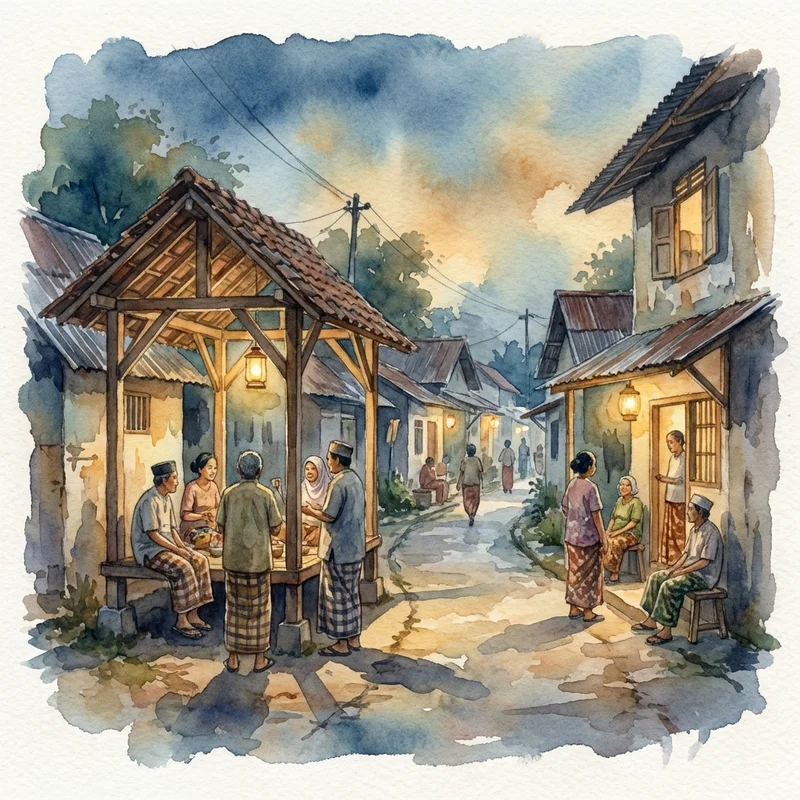
There is hardly a day that goes by in Indonesia without a report of vigilante action (main hakim sendiri, literally ‘playing judge yourself’) carried out by a community. The offences are often trivial, usually involving petty theft, and few questions are asked. While the large-scale communal violence of the early Reformasi period has subsided, routine mob justice has not: monitoring data shows that vigilante incidents actually increased in the decade following decentralisation. This phenomenon remains a feature of Indonesian society that reflects the profound lack of faith many Indonesians continue to have in the police and legal system to protect their lives and property.
In the markets and streets of Java, a cry of ‘Maling!’ (‘Thief!’) remains sufficient for a crowd to form and for summary punishment to be meted out. The consequences, though less frequently fatal than in the chaos of the early Reformasi period, can still be severe.
What has changed is the medium. With more than 220 million internet users and some of the world’s heaviest social media use, Indonesia is one of the world’s largest digital populations. WhatsApp groups, TikTok, and Instagram have added a powerful new dimension to community justice. Perceived offences that would once have remained local affairs can now go viral within hours, generating enormous social pressure on individuals and businesses alike. A business dispute, a perceived slight to local custom, or an environmental complaint can escalate rapidly through digital amplification. The phrase no viral, no justice has entered common usage, reflecting a reality in which social media virality has become a determining factor in whether complaints receive attention from police and authorities. The 2023-2024 Palestine-related boycott of Western brands illustrated the phenomenon at industrial scale: Unilever Indonesia suffered a 15 per cent sales decline in a single quarter, and Starbucks, McDonald’s, and KFC faced sustained campaigns coordinated almost entirely through WhatsApp and TikTok. The court of public opinion has always been powerful in Indonesia; it now operates at speed and scale.
Foreign businesses should also be aware that online speech in Indonesia carries criminal, not merely civil, risk. The Electronic Information and Transactions Law (UU ITE, most recently amended in 2024) makes online defamation a criminal offence, and conviction rates have historically exceeded 90 per cent. The law has been widely criticised for being used disproportionately by the powerful against the less powerful, though a landmark Constitutional Court ruling in April 2025 prohibited corporations and government agencies from filing criminal defamation complaints, limiting this avenue to individuals. For a foreign company, the UU ITE is a double-edged sword: it offers a legal remedy against malicious online attacks that would not exist in most Western jurisdictions, but it also means that careless online statements by company employees about competitors, partners, or officials can attract criminal prosecution.
The implications for foreign businesses are practical. Maintaining good community relations is a matter of operational security as much as of goodwill. A business that falls foul of local sentiment may find itself the subject of intense social media scrutiny long before any formal legal or regulatory action is taken. Conversely, a business that has invested genuinely in community relationships will find those same digital networks working in its favour.
The Local Community
The rule of law, the police and the court system remain relatively weak institutions in Indonesia, notwithstanding significant improvements over the past two decades. The Indonesian legal system by itself cannot be relied upon to secure contractual commitments or to secure property rights. The law is but one instrument to secure rights, and in the Indonesian context, it should be considered secondary to other, more important instruments: foremost among them the local community.
Javanese will sometimes say that the most important people in their lives are not their families, but rather their neighbours. Neighbours live close enough to be called upon in times of need, whereas family members may live very far away. Neighbourhoods in Java are generally very controlled environments; groups of houses are aggregated to form an ‘RT’ (Rukun Tetangga), or neighbourhood council. Groups of RT are then aggregated into an ‘RW’ (Rukun Warga), and so on up through the administrative hierarchy of kelurahan (urban ward) or desa (village). Informal meetings of RT and RW continue to be held regularly. People moving into the neighbourhood are expected to report to the Pak RT; not doing so is considered arrogant. New businesses establishing themselves in any area of Indonesia will invariably come under the jurisdiction of an RT/RW, and relations should be established earlier rather than later. The cultural foundation of these relationships is gotong royong (mutual cooperation, literally ‘to bear together’), a principle so central to Indonesian identity that it is embedded in Pancasila and referenced in the Constitution. A business that participates in communal work days (kerja bakti), contributes to neighbourhood events, hires locally, and is seen to be part of the community earns a place in the network of reciprocal obligation. A business that does not will find itself an outsider.
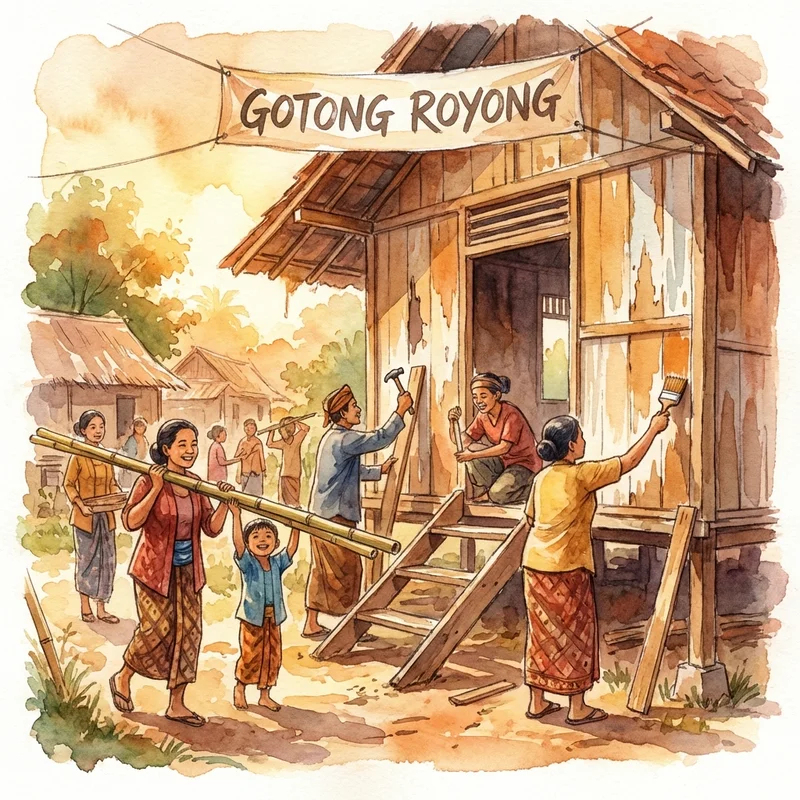
Neighbourhoods form the first line of defence against acts of crime – many still operate a siskamling (community night watch) system in which residents take turns on patrol, sounding the kentongan (wooden slit drum) to raise an alarm – and can provide a useful buffer against interference from certain sections of Indonesian officialdom. Businesses in Indonesia should maintain a strong and genuine consciousness of the surrounding community.
The principle extends well beyond the neighbourhood. Over the past twenty-five years, Indonesia has seen numerous high-profile conflicts between extractive industries and local communities, often with severe consequences for the companies involved. Whether in mining, plantation agriculture, or infrastructure development, businesses that have relied too heavily on legal devices to secure their rights, while paying too little attention to the community, have frequently found those rights effectively unenforceable. Concepts of traditional ownership of land (hak ulayat) remain very strong across Indonesia, and local communities feel they have a stake in what happens in their environment, regardless of titles or contractual rights awarded by a government. The Constitutional Court’s landmark MK35 decision (2013), which ruled that customary forests are not state forests but belong to the communities that have traditionally managed them, affirmed this principle at the highest judicial level. Perhaps the most vivid recent illustration came from the Kendeng Mountains of Central Java, where women of the Samin community set their feet in cement outside the Presidential Palace in 2016 to protest a state-owned cement factory that threatened their water supply; the Supreme Court ultimately sided with the community, ruling that the environmental assessment had failed to account for their interests.
The process of community consultation does not end at the planning stages but must be ongoing and frequent, even (perhaps especially) when there are no apparent issues. Business operations of all kinds must aim to create close and symbiotic relationships with the surrounding community so that the community feels it has a stake in protecting the enterprise. In the language of contemporary business, this is called ‘social licence to operate’, but in Indonesia the concept predates the terminology by centuries.
Corporate Social Responsibility (CSR) expectations have grown. Under Article 74 of the Company Law (Law 40/2007), companies whose operations involve or relate to natural resources are legally required to allocate funds for community development – though no specific percentage is mandated. Even where the legal obligation does not apply, communities increasingly expect tangible contributions to local welfare. Gestures, gifts, employment and money will not ensure good relations if the venture tries to isolate or distance itself from the community. The relationship must be genuine.
Contracts
Notwithstanding all that has been said about the legal system, contracts still have a very important place in Indonesian business, recording in written form understandings that have been reached as a consequence of proper mutual consultation between parties.
The relatively cold, contractual, legalistic nature of Western business transactions makes clear distinctions between personal and business realms. In the West, the attitude ‘a deal is a deal’ means that once an agreement has been reached and signed, it is generally closed for further renegotiation. Western business emphasises textual agreements using the language of law where rights and responsibilities are clearly laid out in writing and binding regardless of circumstances.
Contracts and agreements in Indonesia tend to be less detailed, and contain much more ‘unwritten text’ relying upon the context in which the agreement was made. Much more emphasis is placed upon flexibility; contracts are ‘softer’, and rely upon mutual understanding of the discourse that has occurred between the parties over time, and the trust and interdependency that has built up between them. Contracts can be subject to constant renegotiation and reinterpretation. This fundamental difference in contract culture has not changed in twenty-five years and is unlikely to change in the next twenty-five.
Securing agreements and maintaining contracts in Indonesia requires more than mere written documents. It requires maintaining relationships at as many different layers as possible: personal, business, government, and community. Social pressure for contracting parties to act fairly and honestly towards one another remains of much greater practical value in securing agreements than a sheaf of legal documents.
For international business relationships, the inclusion of international arbitration clauses has become standard practice and is strongly recommended. Parties should specify the precise arbitral institution, its rules, and the seat of arbitration – SIAC (Singapore), HKIAC (Hong Kong), or BANI (Jakarta) are common choices, though the complexities discussed earlier regarding BANI’s institutional history make careful drafting essential. Digital contracts and electronic signatures are now legally recognised under the ITE Law and its implementing regulations, and their use is growing, particularly in Jakarta’s more internationally-oriented business community. A practical distinction applies: certified electronic signatures, issued through a registered Electronic Certification Provider, carry the same evidentiary force as wet signatures; uncertified signatures, while legally valid, carry weaker weight in court proceedings.
Although many satisfactory contracts can be made without the assistance of a notary, the more important a contract, the more important it is to secure maximum legitimacy for the agreement. This is not merely cultural perception: a notarial deed (akta notaris) constitutes ‘perfect evidence’ (bukti sempurna) under Indonesian law – a court must accept its contents as true unless forgery is proved, whereas a private agreement (akta di bawah tangan) can be challenged at the judge’s discretion. Signing ceremonies, overly formal though they may seem, have important symbolic power, serving to increase the prestige and legitimacy of the contract.
It should be noted that the majority of an Indonesian notary’s day-to-day work remains in the preparation of land titles, wills, and property leases. The average notary is less than familiar with more esoteric matters involving company incorporation, foreign investment laws, and business licences. Unfortunately, very few notaries will decline the opportunity to undertake such tasks despite their lack of experience. A bad choice of notary in these matters continues to cause considerable loss of time and money.
Language
Language presents fewer problems in Indonesia than it did a generation ago. English proficiency has improved markedly, particularly amongst the younger, urban, educated population. Indonesia now produces large numbers of graduates who communicate confidently in English, and in Jakarta’s business districts, Bali’s startup scene, and international-facing industries, English is routinely used.
However, outside these settings, reliance on English alone remains risky. An ability to speak even basic Bahasa Indonesia is an enormous asset, and a gesture of respect that is deeply appreciated. Investing in language skills signals commitment and seriousness, and can open doors that would otherwise remain closed.
The ‘yes’ problem described in the original essay is still very much alive. Indonesians, and Javanese especially, will often say ‘yes’ (ya) purely as an indication that they are listening; ‘yes’ in this context does not necessarily indicate understanding or agreement. Many Indonesians will rarely ask for repetition when something is unclear, partly because it is thought impolite, and partly because of embarrassment. These tendencies apply equally to professional interpreters. It is still prudent to repeat important details and to confirm understanding through means other than simply asking “do you understand?”
At higher levels of Indonesian business, contracts written in English are increasingly common. However, Indonesian law requires that contracts involving Indonesian parties be written in Bahasa Indonesia (or, at minimum, in bilingual form with the Indonesian version prevailing in case of dispute). For critical agreements, obtaining more than one translation is still wise.
A distinctly modern development is the centrality of WhatsApp to Indonesian business communication. Foreign businesspeople in Indonesia who are not reachable on WhatsApp are, in practical terms, difficult to do business with.
Company Structures and Foreign Investment
The regulatory framework for foreign investment in Indonesia has been overhauled since 2001. Indonesia now attracts approximately USD 24 billion in net foreign direct investment annually, with record total investment realisation in 2024 driven by downstream nickel processing, digital economy growth, and infrastructure development. What was once a labyrinthine, opaque process has become far more transparent and efficient, though it remains more complex than in many competing investment destinations.

PMA Companies
Any company with any percentage of foreign shareholding is classified as a PMA (Penanaman Modal Asing, or Foreign Capital Investment) company. All PMA companies must take the form of a limited liability company (Perseroan Terbatas, or PT). Other business forms, such as CV (Commanditaire Vennootschap) and UD (Usaha Dagang), are reserved for Indonesian citizens only.
100% foreign-owned PMA companies are now possible in a wide range of business sectors, a significant liberalisation from the earlier position. However, some sectors continue to require a proportion of Indonesian shareholding, as determined by the BUPM. The key requirements for establishing a PMA company are:
- Minimum investment plan of IDR 10 billion (approximately USD 600,000), declared via a Capital Statement Letter and realised progressively: a commitment, not an upfront cash deposit
- Minimum of two shareholders (individuals or entities)
- Minimum of one Director and one Commissioner
- Business activities must align with permitted KBLI codes under the BUPM
The company formation process is now managed through the OSS system and can be completed in approximately 30 days:
- Company name approval by the Ministry of Law (~2 days)
- Deed of Establishment by a notary (~4 days)
- Legal entity approval by the Ministry of Law (~4 days)
- Tax registration (NPWP) from the Tax Office (~3 days)
- Business Identification Number (NIB) via the OSS system (~4 days)
The NIB serves simultaneously as the company’s import identification number, customs identity, and registration certificate, and automatically registers the company for the government’s health and social security schemes (BPJS). Business licences are then issued based on the risk classification of the company’s activities.
This is a far cry from the process described in the original essay, where obtaining an Investment Approval alone could take weeks, followed by an “absolute plethora of licences” from local authorities that could stretch the process to many months. What has replaced much of the old front-end bureaucracy, however, is a substantial ongoing compliance burden: all PMA companies must file quarterly Investment Activity Reports (LKPM) through the OSS system, covering investment realisation, employment, and operational progress. Non-compliance carries severe consequences, including activity suspension, licence revocation, and, critically for foreign investors, a halt on visa and work permit processing.
The BUPM System
As noted earlier, the BUPM replaced the old Negative Investment List in 2021. Each entry in the BUPM specifies a business field, its KBLI classification code, and any conditions (such as foreign ownership limits, local partnership requirements, or technology transfer obligations). Business fields not listed in the BUPM are presumed open to 100% foreign ownership. Certain sectors, particularly mining, carry mandatory divestment obligations requiring foreign investors to transfer a majority stake to Indonesian parties over time.
Representative Offices
For companies not yet ready to commit to a full PMA, a Representative Office (Kantor Perwakilan) provides a way to establish a legal presence in Indonesia without conducting commercial activity. Representative Offices cannot issue invoices, sign contracts, or generate revenue. They are useful for market research and relationship building ahead of a fuller entry.
Joint Ventures
Joint ventures remain an option and are required in certain restricted sectors. However, the lessons of the past twenty-five years are clear: JVs are partnerships, and partnerships that straddle cultures are additionally vulnerable. Differences in perceptions and expectations, incompatible corporate cultures, and unmet commitments have turned many a promising alliance into a bitter dispute. Long-term, performance-based contractual arrangements with Indonesian companies are often a better option than formal JV structures, particularly for smaller ventures.
Notaries
The role of the Indonesian notary (notaris) has not changed. A notarial deed remains essential for company incorporation, and the quality of notarial services is still highly variable. An Indonesia-based corporate services firm will normally use notaries already proven in these fields. Engaging an inexperienced notary for company incorporation is a false economy that continues to produce unfortunate outcomes.
Management Issues for the Western-owned Company
Management control and flexibility are obviously much greater in a PMA company where most or all of the equity is in the hands of the foreign investor. In many JVs, this control is often effectively surrendered to the Indonesian partners who may have their own distinct management styles.
It remains preferable for management of Indonesian-based business enterprises to be undertaken – or at least overseen – by people with genuine knowledge of the Indonesian social, cultural, and political environments. Indonesia is not the easiest country in which to do business, and the cultural dynamics require specialist attention.
The good news is that the pool of capable Indonesian management talent has expanded enormously. Twenty-five years ago, recruiting skilled Indonesian managers was a significant challenge. Today, Indonesia produces substantial numbers of well-educated, internationally-experienced professionals who can bridge Indonesian and Western business cultures effectively. Many have studied at top universities abroad (the government’s LPDP scholarship programme alone funds thousands for overseas graduate study each year, with a requirement to return), and many others have been trained to international standards within Indonesia’s growing multinational corporate sector and its own technology industry. Government policy actively reinforces this trend: the RPTKA (foreign worker permit) framework requires companies to appoint Indonesian companion employees and demonstrate skills transfer, creating structural pressure to localise management over time.
The startup generation of the late 2010s and early 2020s created a new Indonesian management culture that is more meritocratic, more comfortable with flat hierarchies, and more accustomed to Western-style directness than its predecessors. The boom itself has since corrected sharply (some major unicorns have retreated from their original business models, and valuations have fallen dramatically), but the management culture it created endures. However, even in Jakarta’s most cosmopolitan startups, the cultural bedrock described in these pages remains present. A young Indonesian CTO who runs daily standups and communicates in English is still navigating the same web of family obligations, social hierarchies, and relationship dynamics that her parents did.
Attempting to directly apply tight, highly efficient Western management styles and systems can still be counter-productive. Systems should be devised to interface as far as possible with local ways of doing things; while these may appear less efficient, within the Indonesian environment they usually turn out to be more effective in the long run. Trying to push back the tide of culture – turning Indonesians into Westerners – remains not worth the effort. Management should work with the culture, not fight it.
Post-pandemic, remote and hybrid work arrangements have become more common in Indonesian workplaces, particularly in Jakarta and in the technology sector. However, the Indonesian preference for in-person relationship building means that fully remote arrangements are less culturally comfortable than they might be elsewhere. The most effective approach is usually a hybrid one that allows for the social interaction and relationship maintenance that Indonesian workplace culture requires, while accommodating the flexibility that younger workers increasingly expect. It should be noted that Indonesia has no specific legislation governing remote or hybrid work arrangements; companies must document their policies in their Company Regulations (Peraturan Perusahaan), leaving considerable practical ambiguity.
Labour and Labour Relations
Indonesian labour law has undergone its biggest reform in decades through the Omnibus Law on Job Creation (2020/2023), which amended substantial portions of the Manpower Law No. 13 of 2003. The changes have been controversial, provoking mass protests from labour unions, but they represent a genuine attempt to make the labour market more flexible for employers while retaining core worker protections.

Skills and Productivity
Although Indonesian labour is ostensibly cheap, it is not always productive relative to other economies in the region. Skill levels have improved markedly over the past quarter-century, particularly in urban areas and amongst younger workers, but serious gaps remain, especially in technical and vocational skills. The education system has expanded greatly, with near-universal access to primary and secondary education, but quality remains uneven.
Companies frequently need to train workers on the job. Recruiting graduates from Indonesian universities – which have improved considerably – remains an excellent way of inducting talent; however, such recruits may still be less workplace-ready than their Western counterparts. Companies prepared to invest in education and training will be rewarded with employees who tend to be loyal and increasingly productive.
Employment Contracts
Indonesian law recognises two types of employment contract: fixed-term (PKWT) and permanent (PKWTT). Under the Omnibus Law reforms (GR 35/2021), the old apparatus of extensions, grace periods and renewals has been swept away: a fixed-term contract, including any extensions, may now simply run for a maximum of five years. When a PKWT ends, the employer must pay compensation (uang kompensasi) calculated at one month’s wage for every twelve months worked, a new obligation under the Omnibus Law.
A Constitutional Court ruling of October 2024 (Decision 168/PUU-XXI/2023) extended the same five-year ceiling to completion-based contracts and, more consequentially, ordered the government to enact a new standalone Manpower Law by late 2026 – meaning the labour law regime described here is, at the time of writing, once again in transition.
Termination
Recruitment must be undertaken with care, as termination of employment remains regulated. Under the pre-Omnibus regime, dismissal was extremely difficult and could take up to a year of formal warnings. The Omnibus Law has simplified the process somewhat and reduced severance multipliers: for most common termination scenarios (efficiency, restructuring), the practical maximum is now approximately 16-17 months’ wages, down from the theoretical 32 months under the old regime. But dismissal for reasons other than serious misconduct still generally requires negotiation, severance pay, and attention to culturally acceptable face-saving. In practice, management attuned to the cultural dynamics of the workplace can handle these situations much more effectively than those who rely purely on legalistic procedures.
Wages
Minimum wages are set at the provincial level (Upah Minimum Provinsi, UMP), with some regencies and cities setting their own rates (UMK) where local economic conditions warrant. The Omnibus Law eliminated sector-specific minimum wages. The minimum wage calculation is now based on economic growth and per capita consumption data. Jakarta’s minimum wage for 2025 is approximately IDR 5.4 million per month (roughly USD 335), following a generous 6.5 per cent increase, one of the Prabowo administration’s early policy signals. As has long been the case, foreign-owned companies are generally expected to pay above minimum wage rates.
The annual Tunjangan Hari Raya (THR), a religious holiday allowance equal to one month’s wages, remains a legal obligation and must be paid before the relevant religious holiday (Lebaran, Christmas, etc.) for each worker. Non-payment of THR attracts penalties.
Outsourcing
One of the Omnibus Law’s most consequential changes for business operations was the removal of the old core/non-core activity distinction that previously restricted outsourcing to five narrow categories (cleaning, security, transport, catering, and mining support). Companies can now outsource virtually any type of work, provided the outsourcing company is a properly registered PT with an NIB and uses compliant employment contracts. This has greatly expanded operational flexibility for employers, though it remains controversial with labour unions.
Social Security
The old Jamsostek scheme described in the original essay has been entirely replaced by the BPJS system. BPJS Ketenagakerjaan (employment security) covers occupational accident insurance, death benefits, old age savings, pension, and, most recently, job loss benefits. BPJS Kesehatan (health insurance) provides universal healthcare coverage. Both employers and employees contribute; registration is mandatory. The system, while not without its administrative frustrations, represents a fundamental improvement over the nominal protections that existed at the time.
Foreign Workers
Foreign workers in Indonesia must hold a valid work permit. The previous IMTA (work permit) has been effectively merged with the RPTKA (Foreign Worker Utilisation Plan). Once RPTKA approval is obtained from the Ministry of Manpower, a limited stay visa (VITAS) is issued, followed by a limited stay permit card (KITAS). Work permits are valid for one year and renewable. Foreign workers may only hold fixed-term positions – permanent employment of foreigners is not permitted under Indonesian law.
Companies must demonstrate that no suitable Indonesian worker is available for the position and must appoint an Indonesian companion employee (tenaga kerja pendamping) for each foreign worker to facilitate skills transfer, with, as a rule of thumb, around ten Indonesian workers for every foreign worker, varying by sector. Employers must also pay the DKPTKA (Dana Kompensasi Penggunaan Tenaga Kerja Asing) levy of USD 100 per foreign worker per month, paid in advance for the full permit period, before the RPTKA can be validated. Certain positions (including in human resources, legal, and supply chain management) are closed to foreigners entirely.
Workplace Culture
The observations in the original essay about workplace culture remain largely valid. A factory or office lacking a ‘family’ atmosphere will be more likely to experience absenteeism and productivity problems. For many Indonesians, work is an extension of their social life; they need to feel certain about their place and role within an enterprise. Attempting to establish a clinical Western-style business with strict separation of home and work is inappropriate in the Indonesian context. The successful foreign employer in Indonesia is one who manages to blend efficiency with the warmth and social cohesion that Indonesians expect from their workplace.
The Digital Dimension
Perhaps no aspect of Indonesian life has changed more dramatically since 2001 than its digital landscape. Then, internet penetration in Indonesia was negligible and mobile phones were a luxury. Today, Indonesia is Southeast Asia’s largest digital economy, with a gross merchandise value approaching USD 100 billion, and over 220 million internet users, the vast majority accessing the internet through smartphones.
The transformation was catalysed by the rise of home-grown technology companies. Gojek, founded in 2010 as a motorcycle taxi booking service, evolved into a super-app encompassing ride-hailing, food delivery, digital payments, and logistics. Its 2021 merger with e-commerce giant Tokopedia created GoTo Group, which listed on the Indonesia Stock Exchange in 2022. The ecosystem has since matured – and consolidated. Bukalapak closed its physical-goods marketplace in early 2025, and GoTo itself entered merger talks with Singapore-based Grab. The era of exuberant unicorn creation has given way to a more sober phase of consolidation, foreign acquisition, and the hard grind of turning a profit. Indonesia’s digital economy is established, and increasingly integrated into regional and global platforms.
Digital Payments
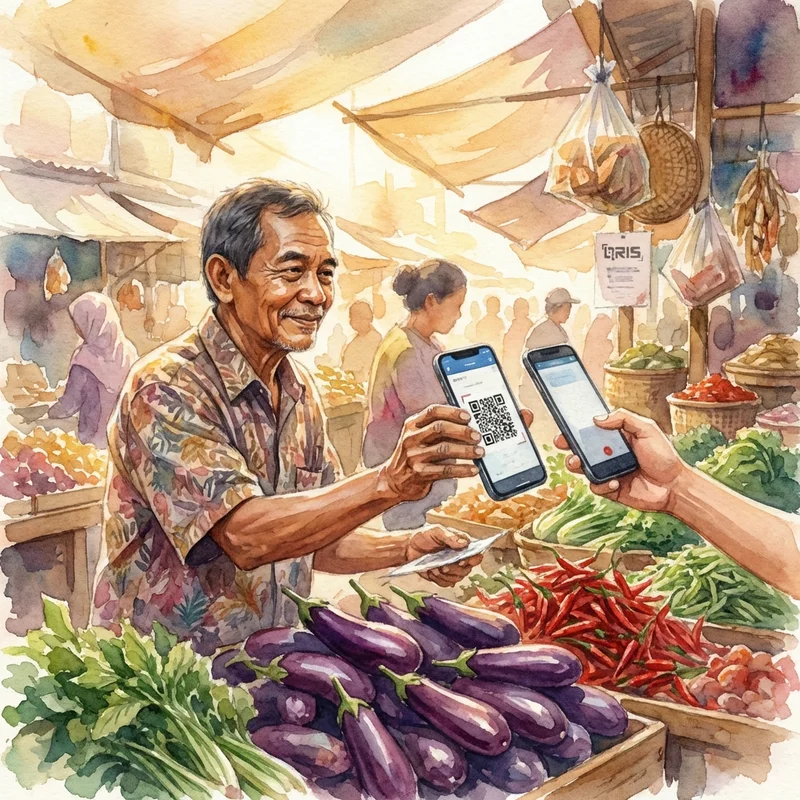
The digital payments revolution has been transformative. GoPay, OVO, DANA, and ShopeePay have created a cashless ecosystem that would have been unimaginable then. Street vendors, market stalls, and warung throughout Java and Bali now routinely accept digital payments via QR codes. Bank Indonesia’s QRIS (Quick Response Code Indonesian Standard) has unified the various payment platforms into an interoperable system: by 2025, over 42 million merchants accepted QRIS, processing billions of transactions annually. For businesses, this means that even small-scale transactions can be conducted digitally, reducing reliance on cash and the informal financial flows that characterised Indonesian commerce a generation ago.
E-Commerce
E-commerce has become a primary market channel. Shopee, Tokopedia, and Lazada compete for Indonesia’s vast consumer market, while social commerce (selling through Instagram, TikTok, and WhatsApp) has become equally important, reflecting the Indonesian preference for relationship-based transactions even in digital contexts. Video commerce, driven by live-selling on platforms like TikTok Shop, has surged, with transaction volumes growing roughly 90 per cent year-on-year by 2025.
The TikTok Shop saga illustrates how the Indonesian government exercises regulatory sovereignty over even the largest foreign technology platforms. In September 2023, the Ministry of Trade banned direct e-commerce transactions on social media platforms, forcing TikTok Shop, for which Indonesia was the largest global market, to shut down overnight. Within two months, TikTok responded by investing USD 1.5 billion to acquire a controlling stake in Tokopedia, effectively merging its live-commerce capabilities with an established Indonesian e-commerce platform. The episode demonstrated both the government’s willingness to protect domestic small traders from a flood of cheap cross-border imports, and the lengths to which foreign companies must go to adapt to Indonesian regulatory realities.
For foreign companies, Indonesia’s e-commerce platforms offer direct access to consumers across the archipelago without the need for extensive physical distribution networks.
Implications for Foreign Business
The digital transformation has genuinely changed the calculus of doing business in Indonesia. A digital-first market entry strategy (selling through e-commerce platforms, using digital marketing, accepting digital payments) is now viable in ways it could not have been even a decade ago. The government has introduced a PSE (Penyelenggara Sistem Elektronik) registration requirement for digital platforms, and the Personal Data Protection Law (UU PDP, Law No. 27 of 2022) came into force in October 2024, with extraterritorial reach and criminal penalties of up to five years’ imprisonment. In a pattern familiar to observers of Indonesian regulation, however, the implementing regulation remains in draft and the promised Data Protection Authority has not yet been established: the law exists, but the enforcement infrastructure lags behind it.
However, it would be a mistake to assume that digital sophistication equates to cultural transformation. The technology may be Western in origin, but its Indonesian implementation is distinctly local. WhatsApp is not merely a messaging tool but the primary medium of business communication, relationship maintenance, and, through its group chat function, community governance. Business deals are negotiated, invoices shared, and customer service conducted via WhatsApp in ways that blend the formal and informal in a characteristically Indonesian manner. Social commerce succeeds precisely because it leverages existing social relationships – the same relationship-based trust that has always driven Indonesian business, now mediated by a screen.
Beyond Java: Regional Business Hubs
The original essay was heavily Java-centric, and for good reason: Java is where the majority of business and political power resides. This remains true today, but Indonesia’s economic geography has diversified sufficiently to warrant brief attention to several other significant business regions.
Bali
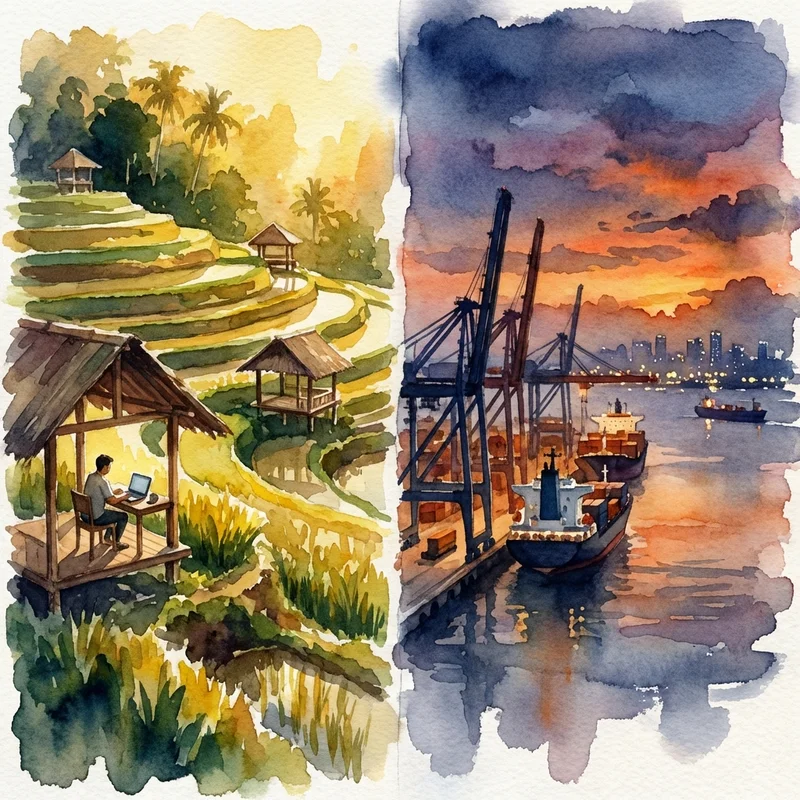
Bali has evolved from a purely tourism-dependent economy into a significant hub for digital nomads, technology startups, and the creative economy. The combination of an attractive lifestyle, established international connectivity, and a relatively cosmopolitan local culture has attracted a growing community of foreign entrepreneurs, particularly in the digital services, software development, and creative industries. Canggu and Ubud have become synonymous with the global co-working culture. The Indonesian government introduced a dedicated Remote Worker Visa (E33G) in 2024, granting a renewable one-year stay for foreign professionals earning above a specified income threshold, reflecting the economic significance of this community. At the time of writing, however, the visa itself is under critical review by the government, prompted by an influx of culturally illiterate ‘influencers’ into Bali. Authorities have also intensified enforcement against foreigners working illegally on tourist or social visas; immigration deployed a social media monitoring unit in late 2024, and hundreds of deportations followed. The message is clear: Bali welcomes foreign entrepreneurs, but on Indonesian terms. Culturally, Bali is distinct from Java (Hindu rather than Muslim, with its own artistic traditions and social structures), and doing business there requires understanding these differences.
Batam
Batam, positioned just 20 kilometres from Singapore across the Singapore Strait, has operated under special development incentives since the early 1970s and was formally designated a free trade zone and free port in 2007. It offers a unique proposition: Indonesian labour costs combined with proximity to Singapore’s logistics infrastructure, financial services, and international airport. Manufacturing, particularly in electronics, shipbuilding, and precision engineering, is concentrated here. Nongsa Digital Park, a joint Indonesia-Singapore initiative, has added a technology dimension, hosting over a hundred tech companies and data centres just 35 minutes by ferry from Singapore. The Batam free trade zone operates under a distinct regulatory regime, with customs and tax advantages that do not apply elsewhere in Indonesia. For businesses that require efficient access to international supply chains, Batam is an attractive option.
Emerging Hubs
Surabaya, Indonesia’s second-largest city, is the commercial capital of East Java and a major industrial and shipping centre. Makassar in South Sulawesi serves as the gateway to eastern Indonesia; the inauguration of Makassar New Port in 2024, with a capacity of two million container units annually and direct shipping routes to Northeast Asia, has strengthened its position as Indonesia’s third major export hub. Balikpapan and Samarinda in East Kalimantan are proximate to Nusantara (IKN), the planned new capital, though the project’s scope has been sharply reduced under the Prabowo administration, with its status downgraded from national capital to ‘political capital’ and its budget cut dramatically. Whether Nusantara will generate meaningful business opportunities remains, at the time of writing, genuinely uncertain.
Each of these regions has its own cultural character. The Sundanese of West Java, the Balinese, the Bugis of South Sulawesi, and the Malay-influenced cultures of Sumatra all differ from the Javanese baseline described above. A foreign businessperson operating outside Java should invest time in understanding the local cultural context, not assume that what works in Jakarta will translate directly.
Culture as Operating System
An adequate understanding of the cultural environment remains essential in order to successfully undertake business in Indonesia. This was the central argument of the original essay, and a quarter of a century of experience has only deepened my conviction that it is true.
The regulations themselves have changed. Company formation that once took months can now be completed in weeks. Licensing that once required navigating a labyrinth of offices can now be done through an online system. Labour law, social security, investment rules – all have been modernised, in many cases substantially. Indonesia is a more efficient, more transparent, and more accessible place to do business than it was a quarter-century ago. At the same time, Indonesia has grown more confident in asserting regulatory sovereignty over foreign participation: as episodes from the TikTok Shop ban to intensified immigration enforcement in Bali make clear, foreign participation is welcome, but the terms are increasingly Indonesia’s to set. The familiar gap between regulation on paper and enforcement on the ground persists, but the direction of travel is toward greater, not lesser, state capacity.
But the culture has not been modernised, nor should we expect it to be. Hierarchy, patronage, musyawarah, the importance of community, the premium placed on relationships over transactions, the indirection of communication, the centrality of rasa – these are not problems to be overcome or relics to be swept away. They are the operating system of Indonesian society, and any business strategy that ignores them is building on sand.

The most successful foreign businesses in Indonesia, across a range of sectors and sizes, are invariably those that have invested in understanding and working with Indonesian culture, rather than trying to import wholesale the assumptions and practices that work in Sydney or San Francisco. That means learning to operate effectively within a profoundly different system, while holding to one’s own standards and values.
Time spent acquiring knowledge about Indonesia’s social and cultural environment is as important as studying the economic climate or researching a business plan.
Indonesia’s trajectory, for all its bumps and detours, gives good reason for cautious optimism. The country’s democratic institutions are holding, if sometimes precariously. Its economy continues to grow. Its digital transformation has created an entirely new dimension for commerce and communication. Its economic geography is diversifying beyond Java. Its young population is creating possibilities that were unimaginable a generation ago. And its ancient cultures, far from being an obstacle to progress, provide a resilience and social cohesion that many supposedly more ‘advanced’ societies might envy.
Bibliography and References
Benedict Anderson (1972), Java in a Time of Revolution, Cornell UP, Ithaca.
David Bourchier and Vedi R. Hadiz (eds) (2003), Indonesian Politics and Society: A Reader, RoutledgeCurzon, London.
Gary Dean (2001), “Doing Business in Indonesia: From a Western Perspective”, in Indonesia: Facing the Challenge, East Asia Analytical Unit, DFAT, Canberra.
Clifford Geertz (1960), The Religion of Java, Free Press, Glencoe.
Vedi R. Hadiz (2010), Localising Power in Post-Authoritarian Indonesia: A Southeast Asia Perspective, Stanford UP.
Ward Keeler (2017), Javanese Shadow Plays, Javanese Selves, Princeton UP.
Franz Magnis-Suseno (1997), Javanese Ethics and World-view: the Javanese Idea of the Good Life, PT Gramedia, Jakarta.
Marcus Mietzner (2023), The Coalitions Presidents Make: Presidential Power and Its Limits in Democratic Indonesia, Cornell UP.
Richard Robison and Vedi R. Hadiz (2004), Reorganising Power in Indonesia: The Politics of Oligarchy in an Age of Markets, RoutledgeCurzon, London.
Paul Stange (1981), The Sumarah Movement in Javanese Mysticism, Ann Arbor: UMI.
Indonesian Legislation and Regulations
Law No. 11 of 2020 on Job Creation (Undang-Undang Cipta Kerja, the ‘Omnibus Law’), as ratified by Law No. 6 of 2023.
Law No. 27 of 2022 on Personal Data Protection (Undang-Undang Pelindungan Data Pribadi).
Government Regulation No. 35 of 2021 on Fixed-Term Employment Contracts, Outsourcing, Working Time and Rest Time, and Termination of Employment.
Presidential Regulation No. 10 of 2021 concerning Business Fields for Investment (BUPM).
Law No. 25 of 2007 concerning Investment.
Law No. 23 of 2014 concerning Regional Government.
Government Regulation No. 5 of 2021 concerning Risk-Based Business Licensing.
BKPM Regulation No. 4 of 2021 concerning Guidelines and Procedures for Risk-Based Business Licensing Services.
Ministry of Trade Regulation No. 31 of 2023 on Business Licensing, Advertising, Guidance, and Supervision of Business Actors in Trade through Electronic Systems.
Data Sources and Reports
Google, Temasek, and Bain & Company, e-Conomy SEA (annual reports, 2016–2025), https://economysea.withgoogle.com.
World Justice Project, Rule of Law Index (annual), https://worldjusticeproject.org.
YaTTi Knowledgebases
Research for this essay was supported by YaTTi, a suite of LLM-powered knowledgebases developed by the Okusi Group. YaTTi uses semantic vector search and retrieval-augmented generation (RAG) to enable natural-language queries across large document collections. The following knowledgebases were consulted:
- Okusi Associates – approximately 8,000 documents comprising Indonesian corporate services, PMA/PMDN company formation, taxation, immigration, and business compliance
- Jawawa – over 250,000 Indonesian news articles (1994–2026) aggregated from the Jakarta Post, Tempo, Antara, Detik, CNN Indonesia, and other sources, indexed as 950,000+ searchable segments. Publicly accessible at jawawa.id
- Peraturan – 5,800+ Indonesian laws and regulations (2001–2025) sourced from peraturan.go.id, indexed as over 209,000 searchable text segments
- Okusi Research – approximately 18,500 research documents on foreign direct investment, corporate law, taxation, and accounting standards for businesses in Indonesia
- Applied Anthropology – over 500 scholarly works indexed as 185,000+ segments, covering cultural anthropology, human behavioural biology, and social evolution, by authors including Clifford Geertz, David Graeber, Robert Sapolsky, and Christopher Boehm