
 Gary Dean
1. The safe behind the wall
On 8 July 2026, police investigators searching a house in a Sentul golf estate found a safe concealed behind a wood-panelled wall. Inside were seven suitcases: 74 kilograms of gold bars, US$4.77 million, S$14.08 million, and a modest Rp100 million in local currency: some Rp476 billion all told.1 The house belonged to Febrie Adriansyah, Deputy Attorney General for Special Crimes: the most senior corruption prosecutor in the Republic. He resigned within three days and was arrested for money laundering within three weeks, protesting that he is the victim of ‘criminalisation’. His office had, five weeks earlier, arrested the head of the President’s flagship free-meals agency for corruption. The investigators who raided him answer to the police, whose own deputy immigration minister had been arrested by the anti-corruption commission the month before that. Every institution in this chain is currently investigating at least one of the others.
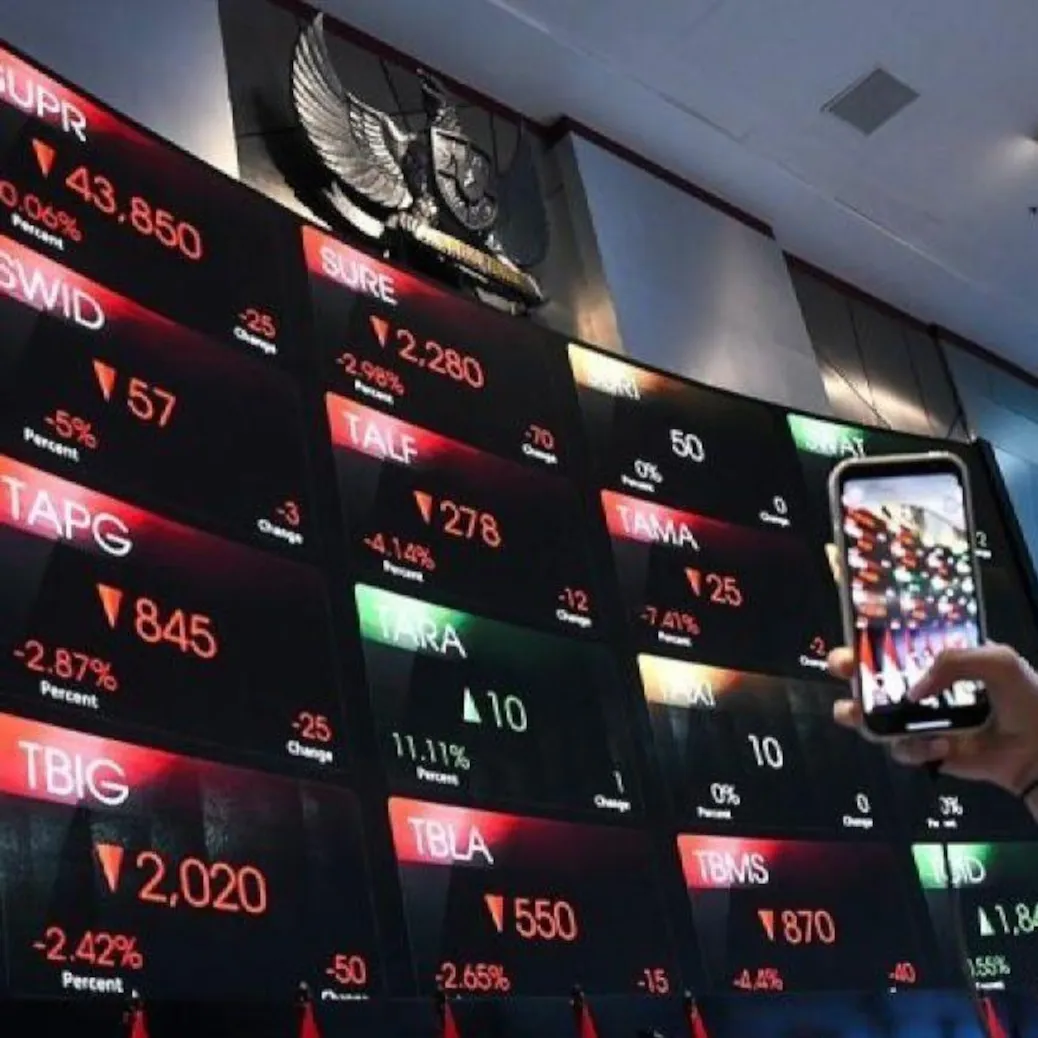
That vignette is the Indonesian condition of August 2026 in miniature, and it is why the year’s headline numbers refuse to resolve into a single story. Consider what is simultaneously true. The rupiah touched 18,188 to the dollar in June, the weakest nominal level in the currency’s history, weaker than the depths of 1998.2 The Jakarta bourse was, for a few days that same month, the worst-performing stock market on earth, down some forty per cent from the all-time high it had set in January.3 Foreign reserves have fallen by eleven billion dollars in six months. Moody’s and Fitch have both turned negative.4 And yet: official growth is running at 5.45 per cent for the half-year, among the best of any G20 economy; second-quarter foreign direct investment set an all-time record, up 27 per cent; S&P has just re-affirmed the sovereign at BBB stable; one of the world’s more famously contrarian value funds has made its first Indonesian purchase in its history; and the stock market rose ten and a half per cent in July.
The temptation is to ask which set of facts is lying. The better question is what kind of country produces both sets honestly. Indonesia in 2026 is not suffering an economic collapse; the real economy’s fundamentals remain, by any emerging-market standard, enviable. It is suffering an institutional repricing: the phase in which markets stop paying for a country’s assets and start charging for its governance. The mechanism of that repricing, and the government’s chosen answer to it, is the subject of this paper. The answer, in a phrase, is the oldest instrument in the Indonesian state’s cupboard: the single door.
2. Two sets of books
The growth number
Official output growth printed 5.61 per cent year-on-year in the first quarter of 20265 — the strongest since 2022, announced on 5 May with the currency in freefall — and 5.29 per cent in the second.6 The number is no longer merely doubted in private; it is contested in public, by name, with arithmetic. LPEM FEB UI’s dissection of the first-quarter release found manufacturing growing 5.04 per cent while value added in electricity, gas and water contracted 0.99 per cent, and manufacturing consumes some forty per cent of national electricity. “Logically, both cannot be true.” Inventories jumped twenty-five-fold in a single quarter, from Rp4.2 trillion to Rp104 trillion, a movement LPEM judged “almost certainly” a statistical reconciliation residual rather than any real behaviour of firms. Their corrected estimate: growth around 4.9 per cent, with underlying private-sector growth nearer 3.9, the difference made up by government consumption (up 21.8 per cent year-on-year) and the inventory artefact.7 Celios has gone further and formally asked the United Nations Statistical Division to audit Indonesian GDP data. BPS, for its part, convened economists behind closed doors as early as August 2025 to defend its methodology.
The precise degree of overstatement is unknowable from outside; the direction of the argument is not. Every independent cross-check — electricity sales, the savings rate, consumer downtrading, tax receipts relative to nominal GDP — points the same way: the economy is growing, but more slowly than the official series admits, and the gap is widest precisely where political sensitivity is highest. Indonesian GDP growth has become something like a New Order election result: the number arrives on schedule, and the question is not what it is but what it measures.
The middle class
The social data are, unusually, more credible than the growth data, because they are embarrassing and published anyway. BPS’s own series shows the middle class shrinking from 57.33 million people in 2019 to 47.85 million in 2024; the Mandiri Institute extends it to 46.7 million in 2025.8 The ‘aspiring middle class’ (the statistical euphemism for those one bad month from poverty) has swollen to roughly 142 million, half the population. Nine and a half million people have fallen out of the middle class in five years, in a country officially growing five per cent throughout. The phenomenon has entered the language: makan tabungan, eating one’s savings, now shortened in social media use to mantab (a grim pun: the word normally means ‘excellent’).9 The savings-to-income ratio keeps declining; households’ holdings of shares and bonds are being liquidated for consumption; the consumption that holds GDP up is funded by the drawdown of household buffers rather than income.
Official poverty (8.07 per cent) and unemployment (4.65 per cent) are at record lows, and the Gini ratio has improved, a paradox resolved by composition: social assistance holds the bottom up while the productive middle is hollowed out, and the jobs being created are informal and low-productivity. Youth unemployment runs around sixteen per cent. Manufacturing’s share of GDP, at about nineteen per cent, is ten points below its late-1990s peak: the premature deindustrialisation that economists have warned about for a decade, now visible as a class structure.
The commodity engine
Beneath the statistical argument, the real economy’s core remains formidable, and it is important not to let the governance story obscure it. Indonesia holds 55 million tonnes of nickel (42 per cent of world reserves) and produces over sixty per cent of world mine output. The 2020 raw-ore ban, which every consultant predicted would frighten capital away, instead pulled processing investment from US$3.6 billion (2019) to US$11 billion (2022) and the smelter count from two to nearly sixty. Exports reached US$283 billion in 2025, up six per cent. The February 2026 trade agreement with Washington fixed tariffs on Indonesian goods at 19 per cent (against the 32 threatened), with zero-tariff quota lines that the textile industry is already exploiting. The demographic base (288 million people, median age around thirty) remains what it was. None of the year’s dramas has touched any of this. That is precisely what makes the capital flight so diagnostic: the money is not fleeing the assets. It is fleeing the referee.
3. The external squeeze
The year’s exogenous shock arrived on 28 February 2026, when the United States and Israel struck Iran’s nuclear and missile infrastructure and killed its Supreme Leader. Iran closed the Strait of Hormuz; roughly a fifth of world oil transit stopped; Brent spiked to around US$109 against an Indonesian budget assumption of US$70. A ceasefire in April, a naval blockade after it, renewed strikes in July: the strait remains, in August, the subject of deadlocked reopening talks, with Brent near US$88 after touching US$91 in late July. For a net oil importer that subsidises fuel at the pump, this is the worst possible shape of shock: the import bill and the subsidy bill explode together. Non-subsidised petrol rose 32 per cent in June; the subsidised tiers were held, at fiscal cost, to protect the street.
The external accounts show the squeeze arithmetically. The balance of payments, in surplus US$7.2 billion as recently as 2024, recorded a US$9.1 billion deficit in the first quarter of 2026 alone; the current account is 1.1 per cent of GDP in deficit; reserves have fallen from US$156.5 billion in December to US$145.3 billion in July. Foreign investors have sold roughly US$3.5 billion of equities year-to-date10 and dumped sovereign bonds in February; cumulative foreign withdrawal since the start of the Prabowo era is plausibly near the nine-billion-dollar mark reported in the commentary, though that figure is an analyst’s construction, not an official series. The more consequential number is the one nobody can verify precisely: resident outflows, reported at US$28.2 billion over 2025–26: roughly three dollars of Indonesian money leaving for every foreign dollar. The figure is uncited and should be treated with caution; the direction it describes is confirmed by the balance of payments (the financial account’s asset side), by parliament’s own warnings about ‘residential outflow’,11 and by every private banker in Singapore. When the people with the best information run first, the problem is rarely the data they are running from.
Two genuine hedges against the squeeze deserve notice. The February trade agreement with the United States (signed at the first summit of the ‘Board of Peace’, the Trump-convened forum Indonesia joined at Davos in January, where Prabowo was the only head of state granted a bilateral) bought tariff certainty and a Boeing order, at the price of a foreign-policy alignment that is now a domestic protest grievance. And the B50 biodiesel mandate, cutting 250,000–300,000 barrels per day of oil imports, is exactly the kind of structural import substitution that makes the oil shock survivable. The state is not incompetent at this game. That is what makes its other choices interesting.
4. The ratchet
Since early 2025 the government has answered the capital exodus not by repricing trust but by re-engineering plumbing. Each measure has a plausible technical rationale; the sequence has a direction. Laid end to end:
| Date | Instrument | Measure |
|---|---|---|
| Mar 2025 | PP 8/2025 | 100% of natural-resource export proceeds held onshore 12 months (oil & gas excepted) |
| Oct 2025 | — | ‘Patriot Bond’ I: Rp50 trillion from 40–50 conglomerates at a 2% coupon against ~5.9% market yields12 |
| Jan 2026 | — | Prabowo’s nephew confirmed Deputy Governor of Bank Indonesia |
| Apr–Jul 2026 | BI (PADG 11/2026 et al.) | Undocumented FX purchases capped in three steps: $100k → $50k → $25k → $10k per month |
| May 2026 | PP 24/2026 | PT Danantara Sumber Daya Indonesia (DSI): all coal, palm oil and ferroalloy exports through a single state trader from 1 Jan 2027 |
| Jun 2026 | PP 21/2026 | Export proceeds confined to state-owned (Himbara) banks; rupiah conversion capped at 50%; permitted-use list |
| Jun 2026 | Law 4/2026, Art. 50A | Patriot/Merah Putih bond purchasers immune from criminal, tax and civil process; purchase data inadmissible |
| Jun 2026 | Law 4/2026 | BI mandate expanded to include job creation; BI obliged to weigh DPR recommendations |
| Jul 2026 | UU PFII | International financial centre: up to 100% tax holiday for 50 years, common-law court, golden-visa tax exemption |
| Sep 2026 (planned) | Perpres pending | All social assistance and subsidised goods distributed solely through 35,872 state-built village cooperatives |
Read as a list of technical measures, each is defensible and severally precedented: China documents FX purchases, India caps remittances, plenty of countries retain export proceeds. Read as a sequence, the pattern is unmistakable: at every point where money moves — out of the country, into dollars, from exporter to buyer, from state to citizen — the state is inserting itself as the mandatory intermediary. Exports flow through one company. Export dollars sit in four state banks. Sovereign wealth flows through one fund. Welfare will flow through one cooperative network. Even absolution flows through one instrument: buy the bond, and the origin of your money will, in the Finance Minister’s own words, “not be scrutinised”.13 The Indonesian policy vocabulary has a term for this and uses it without embarrassment: satu pintu, one door.
Three honesty tests apply to the ‘locking the doors’ reading, and the results are mixed. First, the controls are porous by design: documented transactions remain free, retained export proceeds may pay taxes, dividends and capital-goods imports, and the FX caps bind speculation more than commerce. Second, the ratchet has already reversed once: in July, exporters selling to the United States, China, Canada and Australia were exempted back to the old 30 per cent/three-month regime, a carve-out made under trade-deal pressure that now covers a large share of shipments. Third, the doors leak anyway: the US$80 billion the retention rules were to trap never materialised in the reserves data, a failure the President has conceded in public. The architecture of control is being built faster than it can be made to hold water. Whether that is reassuring or alarming depends on what one thinks comes next: relaxation, or better welding.
5. Institutions under management
The market’s grievance has moved from the plumbing to the plumbers, and here the record of twelve months is stark enough to list.
The Finance Ministry. Sri Mulyani Indrawati — the technocratic guarantee behind two decades of Indonesian fiscal credibility — was removed on 8 September 2025, days after riots, in a reshuffle every wire service reported with the word ‘removed’ rather than ‘resigned’. Her successor, Purbaya Yudhi Sadewa, is capable and communicative, but his signature initiatives (Patriot bonds, the PFII, panda bonds, pressure on BI liquidity) are instruments of mobilisation, not restraint.
Bank Indonesia. The sequence merits its own paragraph, because the commentary circulating abroad has it half right and the truth is worse. In 2025 BI bought roughly Rp200 trillion of government bonds and revived ‘burden sharing’, rebating coupon income to fund housing and cooperative programmes. In January 2026 the President’s nephew, Thomas Djiwandono, was confirmed as Deputy Governor. In June, parliament rewrote BI’s mandate to include job creation and obliged it to consider parliamentary recommendations. Through the same months, to its credit, BI tightened hard (a hundred basis points from April to June, including an emergency inter-meeting hike) and burned ten billion dollars of reserves defending the currency. Then, on 25 July, Governor Perry Warjiyo resigned two years early, for ‘personal reasons’, reportedly after a direct confrontation over the use of BI liquidity for the fiscal agenda.14 The senior deputy, Destry Damayanti, a respected professional, was nominated as his successor on 10 August, a choice the market read with relief.15 But the precedent is now set: a governor of Bank Indonesia can be made to leave. Everyone watching the fit-and-proper test in October knows it.
The statistics agency. BPS is besieged rather than captured — left defending a five-per-cent series that its own sub-components contradict, against economists it must invite to private briefings, with its chief declining to answer press queries about the discrepancies. An agency’s credibility can die of embarrassment as surely as of interference.
Law enforcement. The corruption cases of 2026 read as an inventory of the state prosecuting itself: the free-meals agency chief (June),16 the deputy immigration minister (June), the chief anti-corruption prosecutor (July), each arrested by a rival institution, with the police’s new anti-corruption corps, a Prabowo creation, emerging as the most aggressive actor. Two readings compete. The favourable one: the President is genuinely unleashing law enforcement on the elite, whatever the collateral chaos. The unfavourable one: institutional rivals are conducting a turf war with case files as ammunition, and proximity to power decides who is predator and who is prey. The readings are not mutually exclusive, and the Constitutional Court will shortly rule on a law that grants immunity from all of it to anyone who buys a bond. Article 50A is the tell. A state confident in its courts does not sell exemption from them.
Danantara. Eighteen months old, the sovereign fund now: controls the operating holdings of the SOE complex (~US$900 billion book); issues the Patriot and Merah Putih bonds; owns DSI, the export monopolist; part-finances the PFII financial centre; procures Boeing aircraft under the trade deal; and, in June, orchestrated emergency share buybacks by state banks “without waiting for a general meeting of shareholders, based on regulatory direction” to arrest the market crash. Its executives simultaneously serve as government ministers and regulators. It is exempted, by the 2025 BUMN law revision, from the ordinary definition of state finances that would expose it to audit. Danantara is coming to resemble Pertamina under Ibnu Sutowo: a state within the state, financed by conscription, audited by consent. Pertamina’s 1975 collapse nearly took the Republic’s finances with it. This is not a prediction; it is a family history.
6. The fiscal engine room
The fiscal position is the strangest part of the picture, because on the published numbers there is no crisis at all: the first-half deficit was 0.71 per cent of GDP, the full-year projection 2.85–2.9 per cent, inside the statutory 3 per cent ceiling; revenue is recovering; debt-to-GDP sits around forty per cent, overwhelmingly rupiah-denominated, with foreign ownership of government bonds below thirteen per cent. S&P’s affirmation leaned on exactly this. Two caveats keep the market unconvinced.
First, the ceiling’s history. The ‘sacred’ 3 per cent rule was suspended for three years during Covid (the deficit reached 6.14 per cent in 2020), so the market knows the cap binds only until it doesn’t, and the Finance Ministry’s own stress scenarios (3.5 per cent at $97 oil, 4.1 per cent at $115) have been published. Second, and more importantly, the deficit is increasingly not where the fiscal action is. The flagship programmes are migrating off-budget and into the parastatal complex: MBG free meals (budgeted Rp335 trillion, cut to Rp268 trillion in May, provisionally Rp229 trillion in July as the corruption clean-up bites); the 80,000-unit village cooperative network, funded by diverting the Village Fund (Central Java alone: Rp4.1 trillion of its Rp6.8 trillion) and by Himbara bank loans channelled through an SOE, first instalments due September; Danantara’s bonds; BI’s burden-sharing; panda bonds in Shanghai; the Whoosh railway’s debts parked in ‘special mission vehicles’ explicitly “to avoid burdening the state budget”. The published deficit is increasingly a managed representation of the state’s true fiscal footprint — disciplined in exactly the way the GDP number is high. The 2 per cent Patriot coupon is the purest expression of the method: a nearly-two-trillion-rupiah-a-year interest saving extracted from captive billionaires is, economically, a tax, but it appears in no budget line. Nobody buys a 2 per cent bond in a 6 per cent market out of patriotism.
The programmes themselves deserve one paragraph of fairness. Daily meals reaching 63 million beneficiaries are a real and popular achievement in a country with a genuine stunting problem; the cooperative network addresses a real gap in rural distribution; neither idea is irrational, and their nutritional and distributional aims poll well even with the students protesting their governance. The failure mode is metabolic: 445 food-poisoning incidents with 37,000 victims; the agency head arrested for selling kitchen franchises;17 a Rp1.8 trillion electric-fan procurement surfacing in the cooperative programme within weeks of launch. Programmes this large, built this fast, through single doors, are corruption delivery systems unless policed — and the police are busy raiding the prosecutors.
7. Politics and the street
Prabowo Subianto’s formal political position is close to impregnable. The coalition assembled around him controls parliament to the point that the P2SK amendment, the PFII law and PP 24/2026 moved from draft to law in weeks; the only substantial party outside the tent, PDI-P, spends its energy denying that it masterminds demonstrations. There is no organised opposition with a national machine. The 2029 election is distant, and no plausible challenger is visible.
The street is another matter, and the August 2025 riots are the governing trauma of this administration in the way 1998 was for its predecessors. What began as protest against parliamentary housing allowances became, after a Mobile Brigade vehicle crushed a motorcycle-taxi driver named Affan Kurniawan on 28 August 2025,18 a nationwide convulsion that left ten dead, politicians’ houses looted, and, within a fortnight, the finance minister sacked and the billionaires summoned to buy bonds. The government’s response has been characteristically dual: a genuine Police Reform Commission under Jimly Asshiddiqie (reported February 2026, acted on in May, a statutory limit on police officers holding civilian posts now in drafting), and simultaneous criminal complaints against student critics for ‘insulting the President’. The protest cycle has continued through 2026 on a rolling list of grievances — MBG corruption, the militarisation of civilian programmes, police violence, the cost of living, and, tellingly, foreign policy: Prabowo’s January signature on Donald Trump’s ‘Board of Peace’ charter and the planned troop deployment to Gaza have put “Prabowo antek asing” (Prabowo, foreign lackey) on banners in Yogyakarta. For a president whose brand is nationalist self-reliance, that particular banner stings more than any inflation number.
The deeper social fact is the one in §2: the class that makes regimes safe is the class being liquidated. A middle class of 47 million shrinking by a million a year, atop an aspiring class of 142 million eating its savings, is not a revolutionary situation — Indonesians have seen worse and know what rupture costs — but it is a situation in which every spark finds tinder, and in which the government’s legitimacy strategy has visibly shifted from growth-for-the-middle to distribution-for-the-base: meals, cooperatives, subsidised fuel held flat, social assistance through the new single door. From September, a citizen’s rice will come through a state cooperative; his neighbour’s export dollars sit in a state bank; the conglomerate above them both holds a discount bond it did not want. Every class in its door. The New Order, at its peak, never wired the villages this thoroughly.
8. What is actually happening
When you set the year’s events against a longer past, the pattern stops looking novel. Single-door commodity export marketing is not an innovation; it is a restoration. Guided Democracy ran state trading companies and multiple exchange rates; the early New Order ran BULOG, the log-export monopolies, Pertamina as a parallel treasury; the 1950s ran the Benteng programme’s licensed importers. Every Indonesian state facing a foreign-exchange constraint has reached for the same instrument: put the foreign currency, and the rents that ride on it, under political control. What was built between 1998 and 2010 (the independent central bank, the fiscal rule, the freely floating rupiah, the technocratic finance ministry, BPS’s methodological autonomy) was the historical anomaly, constructed under IMF discipline out of the trauma of the krismon, and maintained for a generation because the people who lived that trauma ran the institutions. They have now left the building: retired, removed, resigned for ‘personal reasons’. The current president’s formation was not the 1998 crisis but the New Order state that made it: an army officer’s instinct that money, like territory, is something a state secures. That formation (the East Timor counterinsurgency, the Kopassus command, the 1998 abductions and the ‘honourable’ discharge that closed them, the rehabilitation through Moertopo’s own corporatist farmers’ association) is documented in the companion essay “The Soldier’s Inheritance”, with the item-by-item mapping of the 2025–26 architecture to its New Order ancestors: KUD to Kopdes, BULOG to DSI, Tapos to the Patriot bonds, the ‘floating mass’ to the beneficiary state.
The Western analytical error, visible in most of the foreign commentary including the better-informed of it, is to read this as policy error, a government mistakenly choosing controls that will backfire. Some of it will backfire. But from inside the tradition, these are not errors; they are choices about what the economy is for. The nickel ban — condemned by every consultant, vindicated by eleven billion dollars of smelters — is the administration’s proof text that defying market opinion pays. The state’s bet in 2026 is that the same holds generally: that capital needs Indonesia’s resources and demography more than Indonesia needs capital’s approval; that the household sector can be stabilised with meals and cooperatives while the adjustment is forced through the balance sheets of exporters, banks and billionaires; that MSCI, Moody’s and the tycoons will all, in the end, stay at the table because the table is too rich to leave. It is not an irrational bet. Allan Gray and the FDI number suggest it may even be half right.
What the bet misprices is time and trust. Controls of this kind are a wasting asset: each door funnels rents to whoever holds the handle, each rent creates a constituency against reform, and the exemptions already multiplying (four trading partners carved out of the DHE rules within weeks) show the arbitrage beginning. Meanwhile the one commodity the strategy consumes — institutional credibility — is the one it cannot manufacture. The PFII financial centre is the strategy’s own confession: a state that answers capital flight by building a walled enclave with imported common law, a dedicated court, foreign-currency freedom and a fifty-year tax holiday has conceded, in statute, that its ordinary law, courts, currency regime and tax system are the problem. Indonesia proposes to cure its allergy to law by building a gated community where the law is imported. The 1998 settlement tried to make the whole country credible; the 2026 settlement offers credibility as a boutique product, for foreigners, on an island, quite possibly on land reclaimed under a Suharto-family concession and still part-owned by the same families. The symbolism could not be sharper if it were designed.
That is the condition of August 2026: a strong economy, a wired society, a state reverting to its oldest operating system, and a market deciding, month by month, how much to charge for the reversion. The state touches the money first. Everything else is detail.
9. Scenarios, 2026–2030
Four scenarios, with assessed probabilities. The probabilities are judgments, not measurements; the discriminating indicators in §10 are what should move them. All four assume no leadership change before 2029; a health event involving the President (74, and 75 in October) would reshuffle every deck below.
Scenario 1 — Managed drift (probability ~45%)
The system neither repairs nor ruptures; it entrenches and leaks. The controls stay, softened by exemptions sold case-by-case; DSI takes over the three commodities in January 2027 and operates as a toll-booth: costly, corrupt at the margins, but functional; Destry Damayanti is confirmed and runs orthodox monetary policy inside shrinking political walls; the deficit prints 2.8–2.9 per cent annually while the true fiscal footprint migrates further into Danantara, Himbara and the cooperatives; growth prints five and is really four-and-a-bit; the middle class keeps shrinking by a million a year; MSCI keeps Indonesia in Emerging Markets with conditions, or opens a consultation that drags for years; Moody’s downgrades one notch to Baa3 and stops. The rupiah trades a 17,500–19,500 band, ratcheting gently weaker; the IHSG oscillates between value-buyer rallies and governance shocks. FDI into resources and processing stays strong throughout: the real economy and the financial economy simply decouple, the first priced on nickel and demography, the second on institutions. By 2029 the cooperative network is the largest patronage machine in Indonesian history and delivers the election comfortably. Indonesia does not break; it discounts. This is the path of least resistance because every actor’s short-term incentive sustains it.
Scenario 2 — Credibility repair (probability ~20%)
The government trades control for capital once the price of the alternative becomes vivid. The plausible sequence: Hormuz reopens and oil settles below $80, removing the fiscal knife; Destry is confirmed with a credible board and the BI liquidity pressure visibly stops; the Constitutional Court strikes down Article 50A (it is constitutionally indefensible, and the Court has occasionally chosen legacy over loyalty); the MSCI November review passes; DSI’s implementation is diluted in practice into a reporting-and-marketing agency rather than a merchant monopolist, the same fate that softened many a previous single door; the DHE exemption list grows until the rule is nominal. The rupiah recovers through 17,000, the bourse re-rates toward its January levels, and the 2026 crisis is retold as a stress test passed. The administration has shown, under acute pressure, that it will reverse (the exemptions, the MBG cuts, the buyback rescue, the trade deal); what it has never shown is doing so before the pressure peaks. Repair, if it comes, will be cyclical and tactical. The statist architecture — Danantara, Kopdes, the BI mandate — survives into the next crisis.
Scenario 3 — The ratchet tightens (probability ~25%)
The Argentine path — not Venezuela, which requires a collapse in production this economy will not suffer, but the cepo cambiario years of 2011–2015: controls begetting controls. The plausible sequence: oil stays above $95 through winter; the 2027 budget strains as Kopdes loans sour on Himbara balance sheets and MBG’s third budget cut fails to hold; the deficit tests 3 per cent and the ceiling is ‘temporarily’ revised — the Covid precedent invoked; BI’s new governor (or Destry, overruled) resumes large-scale bond purchases with the rupiah above 19,000; MSCI opens the frontier consultation in November 2026 or completes it in 2027, forcing the passive money out; DSI’s commodity list, reviewed quarterly, extends to nickel — the escalation that converts a trade-administration story into a mining-sector confiscation story. Under-invoicing and transfer pricing — the diseases DSI was built to cure — return through DSI itself, now with a single throat to bribe. A parallel exchange rate emerges in practice through export mispricing before anyone legislates it. Growth slides toward 3–4 per cent as import compression bites; inflation passes 6; the middle class drops below 45 million; the 2029 election is fought on distribution against a background of visible decay, and won anyway, because the machine is by then the economy. Each control makes the next one necessary. Argentina spent a decade discovering that; Indonesia wrote the discovery into its own history in the 1960s and has apparently filed it.
Scenario 4 — Rupture (probability ~10%)
The compound-shock tail. Ingredients, any two of which suffice: Hormuz escalation holding oil above $120 for quarters; a Himbara banking event (the state banks now simultaneously hold the trapped export dollars, the cooperative loans, the MBG exposure, the buyback losses and the SBN book — a concentration of policy risk in four balance sheets that nobody has stress-tested in public); a frontier reclassification landing in the same season as a Moody’s downgrade; a succession crisis or health event; or an August-2025-scale street explosion meeting a military-minded response. The signature of rupture: disorderly depreciation through 20,000, deposit flight from state banks, genuinely hard controls (moratoria, forced conversion), and the politically radioactive question of external support — radioactive because 1998 made the IMF the national humiliation myth, and no Indonesian government will voluntarily repeat it. Assessed low because the buffers are real: $145 billion of reserves, six months’ import cover, rupiah-denominated debt, capitalised banks, food and fuel programmes that cushion the street, and an elite with everything to lose. But the tail is fatter than at any time since 2008, because the buffers and the vulnerabilities are now held in the same four banks.
What to make of the distribution
Two-thirds of the probability mass (Scenarios 1 and 3) describes a state-directed, slowly discounting Indonesia in which the 1998–2010 institutional settlement is not restored. That is the central judgment of this paper: the reversion to the single door is structural, not cyclical. It survives scenario branching because the crisis merely accelerated it: Danantara predates the crash; the Patriot bonds predate the crash; the nephew’s nomination predates the crash. The administration is building the state it always intended to build. The scenarios differ mainly in how expensively.
10. The watch-list
Dated, in order of arrival. Each is a door: watch which way it swings. (S1–S4 refer to the scenarios of §9.)
| When | Event | Discriminates |
|---|---|---|
| Aug 2026 | PFII location PP (promised ‘before 16 Aug’; the 14 Aug budget speech named Jakarta as temporary seat, Bali ‘when ready’) | Kura Kura designation (and KEK dissolution) = symbol-over-substance confirmed |
| Sep 2026 | Kopdes becomes sole bansos channel; first Himbara loan instalments due | Rollout chaos or loan stress = S3 early warning |
| Oct 2026 (est.) | Destry Damayanti fit-and-proper test, DPR | Confirmation with board intact = S1/S2; a surprise palace candidate = S3 |
| Nov 2026 | MSCI Index Review19 | Retention = S1/S2; frontier consultation = S3 trigger |
| 31 Dec 2026 | DSI transition ends; sole-channel exports 1 Jan 2027 | Operational reality vs paper; nickel’s addition at any quarterly review = major escalation |
| H1 2027 (est.) | MK ruling on Art. 50A | Struck down = the courts still function; upheld = S3 confirmation |
| ~Aug 2027 | Moody’s 12–18-month window closes | Baa3 downgrade manageable; outlook still negative after = compounding |
| Rolling | DHE exemption list | Expansion = doors reopening; reversal = ratchet resumes |
| Rolling | Hormuz / Brent | The exogenous master variable for the fiscal path |
| Rolling | BPS Q releases vs LPEM/electricity cross-checks | Convergence = credibility repair at the margin |
| 2028 | Candidate registration season begins | Kopdes as electoral machine; coalition management; the Gibran question |
11. Appendix: the numbers at a glance
| Indicator | Value | As of |
|---|---|---|
| USD/IDR | ~17,850–17,880 (record low 18,188, 8 Jun) | 14 Aug 2026 |
| IHSG | 6,402 (record 9,174 Jan; trough 5,342 Jun; Jul +10.5%) | 14 Aug 2026 |
| BI Rate | 5.75% (from 4.75% in April) | Jul 2026 |
| FX reserves | US$145.3bn (US$156.5bn Dec 2025) | end-Jul 2026 |
| GDP growth (official) | Q1 5.61%, Q2 5.29%, H1 5.45% | Aug 2026 |
| GDP growth (LPEM corrected, Q1) | ~4.9%; private-sector ~3.9% | May 2026 |
| BoP | −US$9.1bn Q1 (2024: +$7.2bn) | May 2026 |
| Current account | −1.1% of GDP | Q1 2026 |
| Budget deficit | H1 realised 0.71%; FY projection 2.85–2.9% | Jul 2026 |
| Brent | ~US$88 (peak ~$109; APBN assumption $70) | 14 Aug 2026 |
| Sovereign ratings | Moody’s Baa2 neg (Feb); Fitch neg; S&P BBB stable (Jul) | Aug 2026 |
| MSCI status | Emerging Market, Nov 2026 checkpoint | Jun 2026 |
| Middle class | 46.7M (57.3M in 2019); aspiring ~142M | 2025 data |
| Unemployment / poverty / Gini | 4.65% / 8.07% / 0.368 (official) | Aug 2026 |
| MBG | 63.1M beneficiaries; budget Rp335T→268T→229T (prov.) | Jul–Aug 2026 |
| Kopdes Merah Putih | 35,872 units targeted complete Aug; sole bansos channel from Sep | Jul 2026 |
| FDI realisation | Q2 record Rp257.7T, +27.4% y/y (IDR terms) | Aug 2026 |
| US tariff | 19% under Agreement on Reciprocal Trade | Feb 2026 |
Method note: economic and policy facts verified against contemporaneous reporting and the regulation texts; footnoted articles are from the jawawa archive. The resident-outflow figure (US$28.2bn) and the cumulative foreign-withdrawal figure (US$8.9bn) are single-source analyst constructions and are flagged as such in the text. Scenario probabilities are the author’s assessment as of 15 August 2026 and should be revised against the §10 watch-list.
